¿Qué fue el Stay Behind?
Finalizada la Segunda Guerra Mundial, el trauma de la ocupación nazi, unido al miedo al expansionismo soviético, llevó a los gobiernos de Europa occidental a organizarse en torno a una nueva amenaza que se vislumbraba en el horizonte.
Desde que Stalin incumpliera su promesa de celebrar elecciones en Europa Oriental, el temor se incrementó tras el intento de bloquear y rendir por hambre a Berlín oeste, así como tras el golpe de Estado comunista de Checoslovaquia. Este miedo también estaba fundamentado en la diferencia de las fuerzas militares convencionales de los aliados occidentales, con respecto al Ejército Rojo primero, y más tarde respecto al Pacto de Varsovia. [1]
Altos oficiales militares y de inteligencia estadounidenses y británicos estuvieron de acuerdo en poner en marcha una organización, que coordinara una red clandestina que permitiera hacer frente a este enorme desafío mediante tácticas no convencionales, tanto en el ámbito civil, como en el militar, tácticas muchas de ellas aprendidas y refinadas durante la resistencia antinazi.
Se trataba, pues, de entrenar a un conjunto de pequeños grupos de militares y personal civil bajo la coordinación de la OTAN, recayendo el mando y la responsabilidad final de estos, sobre los gobiernos de los países miembros de la Alianza. Estos grupos de militares en la retaguardia (stay behind) se mantendrían ocultos en caso de invasión, y una vez el enemigo les hubiese superado, saldrían de sus escondites para llevar a cabo ataques y sabotajes con el fin tratar de retrasar y entorpecer el avance soviético.
La existencia de una red de resistencia clandestina durante la Guerra Fría, fue revelada públicamente por el primer ministro italiano, Giulio Andreotti, en agosto de 1990. Actualmente, siguen sin conocerse cuáles fueron los verdaderos motivos que llevaron a Andreotti a realizar tales revelaciones. Este hecho abrió una verdadera caja de Pandora de especulaciones y acusaciones de conspiración de todo tipo. Entre las acusaciones más directas, encontramos las del secretario general del Partido Comunista italiano, Achille Occhetto, en las que afirmaban que denunció una «vasta conspiración contra la democracia, responsable tanto de las matanzas, como de las tramas golpistas». [2]
Este reportaje, en definitiva, tratará de ofrecer un acercamiento general a la historia del Stay Behind, describir los principales acontecimientos con un cierto orden cronológico, describir algunas de las diversas funciones y tareas que desarrollaron estos grupos clandestinos durante la Guerra Fría, junto con un resumen de los hechos más destacados que tuvieron lugar en cada uno de los países donde existieron estas redes secretas. Se trata de un tema extremadamente extenso que merece la pena ser abordado.
Los orígenes del Stay Behind
Los Stay-Behind (SB) [A] fueron grupos de personal militar y civil creados por los servicios de inteligencia de cada uno de los países en los que operaron, junto con la ayuda de la OSS (posteriormente la CIA), y por el MI6 (cuya existencia fue reconocida oficialmente en 1994). La mayor parte de la financiación provenía de Washington y Londres. El objetivo era organizar una red de resistencia secreta, con capacidades tales como recopilación de inteligencia, vigilancia, adquisición de objetivos, evasión y escape (E&E, exfiltración), reconocimiento, así como operaciones psicológicas y guerra no convencional.
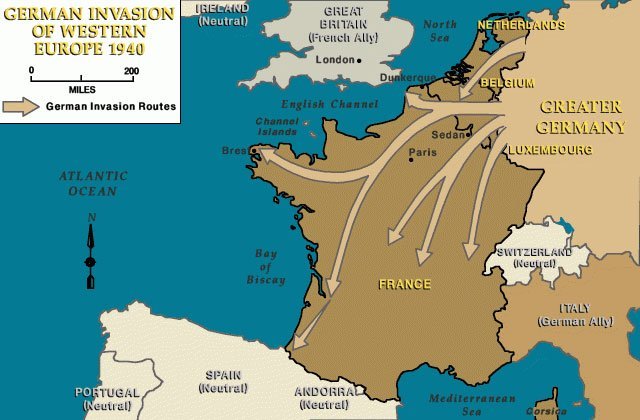
Una de las prioridades de los grupos Stay Behind era retrasar el avance de una eventual invasión soviética, tratando de evitar un rápido avance que permitiera a los ejércitos del Pacto de Varsovia hacerse con el control de toda la costa del Atlántico occidental, lo que generaría un grave problema en un eventual contraataque aliado. Si a la Wehrmacht le había llevado apenas tres semanas llegar hasta las costas atlánticas y hacerse con toda Francia (10 de mayo–25 de junio de 1940), al monstruoso ejército del Pacto de Varsovia probablemente no le iría peor. Por lo tanto, una de las primeras prioridades del Stay-Behind era, precisamente, que no se repitiera una nueva Operación Dynamo.
De aquella humillación militar, los aliados occidentales terminarían aprendiendo una dura lección y extrayendo muchas conclusiones para que algo así no volviera a repetirse.
El SOE, las Auxunits y los primeros grupos en Francia en los que se inspirará el Stay-Behind
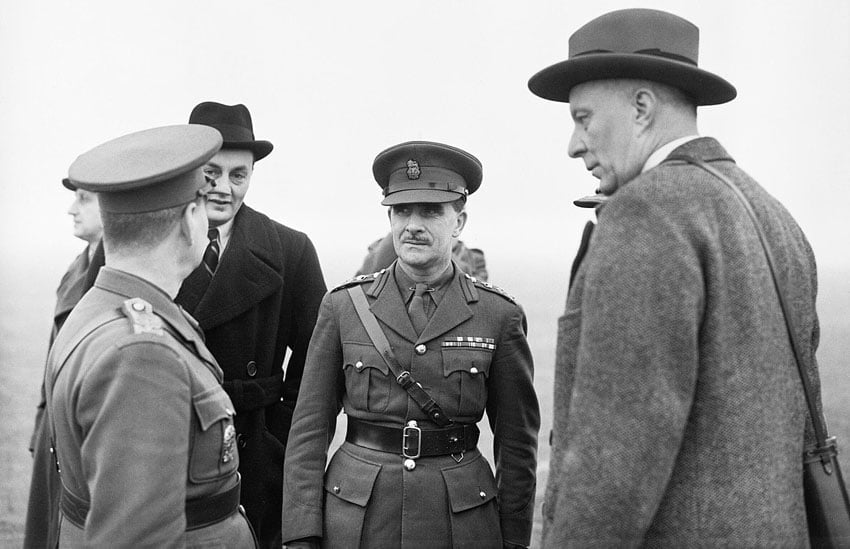
En el verano de 1940, alarmados por la velocidad del avance nazi y la perspectiva de una próxima invasión de Gran Bretaña, los Jefes de Estado Mayor británicos comenzaron a organizar grupos de combatientes especializados en tácticas de guerra no convencional, soldados altamente adiestrados que se mantendrían tras de las líneas enemigas, y librarían lo que en cierto modo se puede considerar una guerra de guerrillas contra las fuerzas de ocupación alemanas.
Tras la caída de toda Europa occidental en manos de Alemania, los servicios de inteligencia británicos crean el Special Operations Executive (SOE) el 22 de julio de 1940, gracias a la participación de la sección D del servicio secreto británico (SIS), más conocido como MI6, fundado el 4 de julio de 1909. La sección D del SIS estaba a cargo de operaciones clandestinas, y se había formado en 1938. Entre sus responsabilidades estaban las misiones de espionaje, sabotaje y reconocimiento. El SOE ayudó a diversos movimientos de resistencia en la Europa ocupada. Desde la Resistencia francesa, a los partisanos de Tito en Yugoslavia, más tarde, a través de la Misión Maclean (MACMIS). El SOE adiestraba a los partisanos en tácticas de guerra no convencional y proporcionaba financiamiento y armas. [3]
El gobierno británico creó en primer lugar una red de resistencia en las islas británicas, para hacer frente a una posible invasión alemana. La red británica reclutó a un número de voluntarios indeterminado, la mayoría pertenecían al Batallón de Cazadores de Montaña de la Guardia Escocesa. Uno de los principales líderes de esta red británica contra una invasión alemana fue Colin Gubbins, quien más tarde se convirtió en el primer jefe del SOE en el continente, y en el principal responsable de «coordinar todas las acciones por medio de sabotaje y subversión contra el enemigo de ultramar». [4] Por otro lado, el entrenamiento de los soldados de este grupo original de resistentes, fue encargado a Michael Calvert, más conocido como «Mad Mike», un oficial del cuerpo de ingenieros. Calvert había sido campeón de boxeo en su juventud, y tenía experiencia infiltración y sabotaje. La red británica creó escondites para guardar gran cantidad de armas a lo largo y ancho de Inglaterra, Gales y Escocia.
Gubbins fue propuesto, tras una solicitud hecha por el servicio de inteligencia militar MI(R) al Gabinete de Guerra de Winston Churchill, el 17 de junio de 1940, solicitud que sería aprobada por el Comandante en jefe de las Fuerzas Nacionales de Gran Bretaña, el general Lord Ironside. Por entonces, ya existía una unidad entrenada para permanecer tras las líneas alemanas, la Unidad de Observación, adjunta al XII Cuerpo de Ejército. Las nuevas formaciones, llamadas Auxiliary Units, pero más conocidas como Auxunits, habían empezado a recibir entrenamiento desde julio de 1940 en los condados del sur y sureste. Para el otoño de 1940, la red ya contaba con casi 3500 hombres y mujeres. Paralelamente, se creó una Sección de Funciones Especiales, equipada con transmisores de radio para tareas de inteligencia. Las Unidades Auxiliares de Gubbins pueden ser consideradas el primer ejemplo de red Stay-Behind: «Redes secretas organizadas por un estado en preparación para actividades de resistencia durante una eventual ocupación enemiga». [5]
Finalizada la guerra, tanto el SOE (15 de enero de 1946) como las Unidades Auxiliares se disolvieron. Las operaciones y las redes de resistencia creadas durante la guerra contra los nazis, inspirarían la creación de los Stay-Behind de la OTAN a finales de los años 40. [6] El Consejo del Estado Mayor británico aprobó, provionalmente el 4 de octubre de 1945, los objetivos a largo plazo de la agencia sucesora del SOE, la Special Operations Branch del MI6 (SOB).
El objetivo prioritario era la creación de toda la estructura necesaria, para mantener una red con la capacidad de extenderse con rapidez en caso de guerra. El segundo objetivo consistía en realizar un análisis profundo de las necesidades del gobierno británico en materia de operaciones clandestinas en el extranjero. «Se decidió preparar esas acciones prioritariamente en los países con posibilidades de ser invadidos durante las primeras fases de un conflicto con la Unión Soviética, aunque no [estuviesen] sometidos aún a la dominación de Moscú.» [7]

SUSCRÍBETE para acceder a TODOS LOS CONTENIDOS
Durante 30 DÍAS totalmente gratis.

Si ya estás SUSCRITO inicia sesión.
Epílogo
Uno de los motivos para el desarrollo de este reportaje, ha sido tratar de ofrecer una visión alternativa al libro de Daniele Ganser, así como al final del mismo, una crítica a la tesis del autor en torno a su idea del Stay-Behind, como un programa dirigido por la OTAN para planear y ejecutar atentados terroristas utilizando a extremistas de derechas, con el fin de manipular procesos electorales, perseguir organizaciones de izquierda o llevar a cabo asesinatos políticos.
Así, este reportaje, además de tratar los aspectos más controvertidos, ha buscado ofrecer una visión más completa, describiendo ampliamente los orígenes del Stay-Behind, su doctrina general, algunos de los roles, misiones y deberes de las unidades implicadas, además de qué tipo de organizaciones y unidades militares y clandestinas estuvieron involucradas, y cuál habría sido la división de tareas entre ellas en caso de una invasión del Pacto de Varsovia.
También se ha planteado la idea, al contrario que Ganser, de que una cosa es hacer una investigación crítica del papel de los estados en cuanto a los vínculos de ciertas organizaciones y terroristas con los servicios de inteligencia, y otra bien diferente, es hacer acusaciones tan graves de conspiración, sobre cómo un gupúsculo en lo alto de la cadena de mando de la OTAN movía los hilos de los destinos de los países miembros.
El Stay-Behind no fue Gladio, y Gladio fue solo una parte del Stay Behind, la rama italiana, uno de los principales errores que se comete por muchos articulistas, queriendo hacer ver que en el resto de los países se actuó de una forma similar a como se actuó en Italia, bajo un plan preestablecido de la OTAN. Eso, y por supuesto, hablar de forma un tanto frívola y sensacionalista de «ejércitos secretos», cuando como mucho, se ha estimado que sus miembros no sobrepasaron los varios miles en total.
El Stay-Behind fue, pues, una estructura mucho más compleja y diversa, una estructura producto de un periodo especialmente oscuro e impredecible, consecuencia lógica del trauma que supuso la ocupación nazi, y del miedo a una nueva ocupación de otro totalitarismo, y que, sin embargo, se ha simplificado generalmente, para enfocarlo por intereses políticos, como una «vil red conspiratoria infiltrada por la extrema derecha para llevar a cabo atentados terroristas». [379]
FUENTES
- [1] The United States, NATO, and the Soviet Threat to Western Europe: Military Estimates and Policy Options, 1945–1963. Phillip a. Karber, jerald a. Combs. Diplomatic History, Vol. 22, No. 3 (Summer 1998), pp. 401-425. https://www.jstor.org/stable/24913704
NATO and Warsaw Pact: force comparisons. https://www.nato.int/cps/fr/natohq/declassified_138256.htm
Rearming for the Cold War. 1945-1960. https://history.defense.gov/Portals/70/Documents/acquisition_pub/OSDHO-Acquisition-Series-Vol1.pdf?ver=rGUpVbIx85BVDq6g4–cyA%3D%3D - [2] L’Unità, 29/10/1990
El caso Gladio: Una red militar clandestina en la Italia de la Guerra Fría. Juan Avilés. https://www.unisci.es/wp-content/uploads/2019/10/UNISCIDP51-5AVILESpdf-1.pdf - [3] S.O.E.: An outline history of the special operations executive 1940. M R D Foot. 20 marzo 2014.
SOE in France: An Account of the Work of the British Special Operations Executive in France 1940-1944. M.R.D.
SOE Manual: How to be an Agent in Occupied Europe (Kindle Edition). British Special Operations Executive. 2014
Sabotage and Subversion: The SOE and OSS at War (Paperback). Ian Dear. 1996
SOE: The Special Operations Executive, 1940-46 (Paperback). M.R.D. - [4] Sir Colin McVean Gubbins. https://www.staybehinds.com/colin-mcvean-gubbins
- [5] Strategy of ‘Stay-Behind’. Introduction to the Special Section : Preparing for a Soviet occupation. Leopoldo Nuti and Olva Riste. https://www.researchgate.net/publication/233439386_Introduction_-_Strategy_of_’Stay-Behind’
- [6] Timewatch: Operation Gladio, The Ring Masters. https://youtu.be/1U9R35vmMAc?t=1186.
Survival in the Russian Occupied Zone Command and Organization in Resistance Underground Operations Col. Kevin D. Stringer, PhD, U.S. Army Reserve. https://www.armyupress.army.mil/Portals/7/military-review/Archives/English/JA-21/Stringer-Russian-Occupied-Zone.pdf - [7] Britain and European Resistance 1940–1945: A survey of the Special Operations Executive. David Stafford. St Antony’s College, Oxford, 1980. p.203
- [8] Timewatch: Operation Gladio, The Ring Masters. https://youtu.be/1U9R35vmMAc?t=615. Ep.1. 42:23
- [9] Diplomacy. Henry Kissinger. New Yorl Simon & Schuster. 1994. pag. 457.
Stay Behind: A Clandestine Cold War Phenomenon. Olav Riste. Journal of Cold War Studies, Vol. 16, No. 4 (Fall 2014), pp. 35-59 (25 pages). https://www.jstor.org/stable/26926142 - [10] The United States, NATO, and the Soviet Threat to Western Europe: Military Estimates and Policy Options, 1945–1963. Phillip a. Karber, jerald a. Combs. Diplomatic History, Vol. 22, No. 3 (Summer 1998), pp. 401-425. https://www.jstor.org/stable/24913704
El Ejército Soviético: Una evaluación soviética del ejército rojo en la segunda guerra mundial. Mayor General V.D. Sokolovskiy - [11] The OSS in Vietnam, 1945: A War of Missed Opportunities by Dixee Bartholomew-Feis. https://www.nationalww2museum.org/war/articles/oss-vietnam-1945-dixee-bartholomew-feis
JOURNAL ARTICLE Review: Temporary Allies: The OSS and Ho Chi Minh. E. Bruce Reynolds. https://www.jstor.org/stable/24916207 - [12] OSS Double-Agent Operations in World War II Robert Cowden. https://www.cia.gov/static/a9ec369dd40dea7e01e8c3972539ca48/OSS-Double-Agent-Operations.pdf
- [13] Secret Agents, Secret Armies: The Short Happy Life of the OSS. https://www.nationalww2museum.org/war/articles/wwii-secret-agents-the-oss
- [14] Sisterhood of Spies: The Women of the OSS. Naval Institute Press. Elizabeth P. McIntosh. (1998). pp. 95, 143, 148–51, 168–9
- [15] Allen Dulles and No. 23 Herrengasse, Bern, Switzerland, 1942-1945. https://text-message.blogs.archives.gov/2012/11/09/allen-dulles-and-no-23-herrengasse-bern-switzerland-1942-1945/
- [16] Secret Agents, Secret Armies: The Spy Who Captured an Army. https://www.nationalww2museum.org/war/articles/wwii-spy-allen-dulles
- [17] The Office of Strategic Services: America’s First Intelligence Agency. Acknowledgments. A publication of the Central Intelligence Agency. https://www.cia.gov/static/Office-of-Strategic-Services.pdf
- [18] The Encyclopedia of the Cold War: A Political, Social, and Military History. Vol. 1. 2007. pp. 79–80.
James Angleton, Counterintelligence Figure, Dies. Stephen Engelberg. The New York Times, May 12, 1987, p. D31. https://www.nytimes.com/1987/05/12/obituaries/james-angleton-counterintelligence-figure-dies.html
Deception: The Invisible War between the CIA and the KGB. Edward Jay Epstein. New York: Simon and Schuster, 1989 - [19] Timewatch: Operation Gladio, The Ring Masters. 10:15. https://youtu.be/1U9R35vmMAc?t=615
- [20] The Ends of a State: James Angleton Counterintelligence and the New Criticism. John Kimsey DePaul University. https://scalar.usc.edu/works/the-space-between-literature-and-culture-1914-1945/vol13_2017_kimsey
- [21] Introduction – Strategy of ‘Stay-Behind’ Leopoldo Nuti, Olav Riste. https://www.tandfonline.com/doi/abs/10.1080/01402390701676485
- [22] Bericht der Bundesregierung über die Stay-Behind-Orgnisation des Bundesnachrichtendienstes; Punkt 1: Historische Entwicklung. (PDF) Abgerufen am 6. März 2017.
Bericht der Bundesregierung über die Stay-Behind-Orgnisation des Bundesnachrichtendienstes; Punkt 2.2: Entwicklung der Stay-behind-Organisation; Erich Schmidt-Eenboom, Ulrich Stoll: Die Partisanen der NATO, S. 164
Bericht der Bundesregierung über die Stay-Behind Organisation des Bundesnachrich tendienstes. Lutz Stavenhagen. 3 de diciembre de 1990 - [23] André Moyen. Operation Gladio. Allan Francovich. BBC2. 10 Junio 1992. https://youtu.be/-TrN-t24GuE?t=2524
- [24] Norwegian Intelligence Service. Olav Riste. p. 16
- [25] Stay Behind Organizations: Training and Exercises. https://www.youtube.com/watch?v=lrE2ACgbdeQ
- [26] Autobiography of Sven Blindheim: Offiser i krig ogfred (Officer in war and peace). Ronald Bye and Finn Sjue, Norges Hemmelige Haer
Historien om Stay Behind (Oslo: Tiden Norsk Verlag, 1995), p. 62. - [27] Services Secrets, Guerre Froide et ‘stay-behind’ Part III. Pietro Cedomi. Répertoire des réseaux S/B. en la publicación belga Fire! Le Magazine de l’Homme d’Action, noviembre/diciembre de 1991, p.82
- [28] De Nederlandse inlichtingen en veiligheidsdiensten. Frans Kluiters (1993), p.309
- [29] Britain and European Resistance 1940–1945: A survey of the Special Operations Executive. David Stafford. St Antony’s College, Oxford, 1980. p.211.
Las operaciones secretas de la CIA: espionaje, contraespionaje y acción encubierta, Boulder, Westview Press, 1988, pág. 166. - [30] Western Union. https://www.cvce.eu/en/education/unit-content/-/unit/803b2430-7d1c-4e7b-9101-47415702fc8e/d16547a7-de20-4a4f-9bfe-29dbfc79be69
The Brussels Treaty (17 March 1948). CVCE.EU by UNI.LU. https://www.cvce.eu/en/obj/the_brussels_treaty_17_march_1948-en-3467de5e-9802-4b65-8076-778bc7d164d3.html - [31] Beziehungen zwischen der Organisation P-26. Pierre Cornu. p. 22
Eyes on target: ‘Stay-behind’ forces during the Cold War. Tamir Sinai. https://journals.sagepub.com/doi/10.1177/0968344520914345#fn38-0968344520914345 - [32] Wartime Psychological Warfare in Europe, S.G. 194, MC-03-Military Committee, Standing Group, Standing Group Documents, 1952, p. 12, NAO. http://archives.nato.int/uploads/r/null/1/1/114702/SG_194_ENG_PDP.pdf
Eyes on target: ‘Stay-behind’ forces during the Cold War. Tamir Sinai. https://journals.sagepub.com/doi/10.1177/0968344520914345#fn38-0968344520914345 - [33] Address given by Ernest Bevin to the House of Commons (22 January 1948). https://www.cvce.eu/content/publication/2002/9/9/7bc0ecbd-c50e-4035-8e36-ed70bfbd204c/publishable_en.pdf. https://api.parliament.uk/historic-hansard/commons/1948/jan/22/foreign-affairs
- [34] Britain and European Resistance 1940–1945: A survey of the Special Operations Executive. David Stafford. St Antony’s College, Oxford, 1980. p.211
- [35] Les maîtres espions. Histoire mondiale du renseignement. Volume 2. De la Guerre froide à nos jours. Roger Faligot y Rémi Kauffer. Editions Laffont, París, 1994. p.53
- [36] Eyes on target: ‘Stay-behind’ forces during the Cold War. Tamir Sinai. https://journals.sagepub.com/doi/10.1177/0968344520914345#body-ref-fn8-0968344520914345
- [37] Inquiry into Operation Gladio, Part I: the First Years. Primera sección de un informe de la Comisión de Investigación del Parlamento italiano sobre la Operación Gladio. https://www.senato.it/service/PDF/PDFServer/BGT/909971.pdf
Eyes on target: ‘Stay-behind’ forces during the Cold War. https://journals.sagepub.com/doi/10.1177/0968344520914345#body-ref-fn8-0968344520914345 - [38] Beziehungen zwischen der Organisation P-26. Pierre Cornu. p. 22
Eyes on target: ‘Stay-behind’ forces during the Cold War. Tamir Sinai. https://journals.sagepub.com/doi/10.1177/0968344520914345#body-ref-fn8-0968344520914345 - [39] Wartime Psychological Warfare in Europe, S.G. 194, MC-03-Military Committee, Standing Group, Standing Group Documents, 1952, p. 12. http://archives.nato.int/uploads/r/null/1/1/114702/SG_194_ENG_PDP.pdf
- [40] Operatiën en Inlichtingen O&I The Dutch Stay-Behind Organisation during the Cold War. https://www.cryptomuseum.com/spy/sbo/nl/index.htm
- [41] With an Eye to History: The Origins and Development of “Stay-Behind in Norway. Olav Riste. Journal of Strategic Studies, 30:6 (2007), pp. 997–1024. https://www.tandfonline.com/doi/pdf/10.1080/01402390701676527?needAccess=true
‘Intelligence within BAOR and NATO’s Northern Army Group’. Richard. Aldrich. Journal of Strategic Studies, 31:1 (2008), p. 1010. https://wrap.warwick.ac.uk/932/ - [42] With an Eye to History: The Origins and Development of “Stay-Behind” in Norway’. Olav Riste. Journal of Strategic Studies, 30:6 (2007), pp. 997–1024. https://www.tandfonline.com/doi/pdf/10.1080/01402390701676527?needAccess=true
Intelligence within BAOR and NATOs Northern Army Group. Richard Aldrich. Journal of Strategic Studies, 31:1 (2008), p. 1010. https://wrap.warwick.ac.uk/932/ - [43] Gladio. La Verità negata. Paolo Inzerili. Edizioni Analisi, Bologne, 1995. p.61.
- [44] Gladio. La Verità negata. Paolo Inzerili. Edizioni Analisi, Bologne, 1995. p.62.
- [45] Gladio. Gerardo Serravalle. Edizione Associate, Rome, 1991. p.78.
- [46] Gladio. Gerardo Serravalle. Edizione Associate, Rome, 1991. p.79
- [47] Stay-Behind in France: Much ado about nothing? Charles Cogan. Journal of Strategic Studies, 30:6 (2007), pp. 937–54. https://www.tandfonline.com/doi/abs/10.1080/01402390701676493
Die Partisanen der NATO: Stay-Behind-Organisationen in Deutschland 1946–1991. Erich Schmidt-Eenboom, Ulrich Stoll.
Beziehungen zwischen der Organisation P-26. Pierre Cornu.
Bericht an den Bundesrat (Bern 1991 released to the public 2018). p. 949. https://www.newsd.admin.ch/newsd/message/attachments/52169.pdf - [48] SHAPE Problems Outstanding with the Standing Group, 21 March 1953, SGM-0803-53, 03
Military Committee, Standing Group, Standing Group Memorandum, 1953, NAO. http://archives.nato.int/supreme-headquarters-allied-powers-europe-problems-outstanding-with-standing-group;isad - [49] With an eye to history: The origins and development of ‘Stay-Behind’ in Norway. Olav Riste. p. 1013. https://www.semanticscholar.org/paper/With-an-eye-to-history%3A-The-origins-and-development-Riste/079d85543eb383e4339f0b2c35d386371f2b7851
Status of Planning and Preparation for CIA’s Clandestine Services Wartime Operations and Activities, 12 February 1954, General CIA Records, CLO, p. 5. https://www.cia.gov/library/readingroom/document/cia-rdp78-04445a000100050001-9 - [50] Eyes on target: ‘Stay-behind’ forces during the Cold War. Tamir Sinai. https://journals.sagepub.com/doi/10.1177/0968344520914345#body-ref-fn8-0968344520914345
Draft of NSC Directive on Covert Operations and Clandestine Intelligence Activities, 08 January 1951, Document 38, Historical Documents, Foreign Relations of the United States, 1950–1955, The Intelligence Community, 1950–1955, TNA. https://history.state.gov/historicaldocuments/frus1950-55Intel/d38
Draft Report on Special Operations, 14 November 1951, Document 93, Historical Documents, Foreign Relations of the United States, 1950–1955, The Intelligence Community, 1950–1955, TNA. https://history.state.gov/historicaldocuments/frus1950-55Intel/d93 - [51] The CIA’s Secret Armies in Europe. Jonathan Kwitny. The Nation, 6 de abril de 1992, p.445
Agencia internacional de prensa Associated Press, 14 de noviembre de 1990. - [52] André Moyen. Operation Gladio. Allan Francovich. BBC2. 10 Junio 1992. 42:04. https://youtu.be/-TrN-t24GuE?t=2524
- [53] National Security Council Directive on Office of Special Projects, 18 June 1948, Document 292, Historical Documents, Foreign Relations of the United States, 1945–1950, Emergence of the Intelligence Establishment, TNA.
Gladio. Jan de Willems. Editions EPO. 1991. p.145 - [54] The CIA’S office of policy coordination: From NSC 10/2 to NSC 68. Michael Warner. https://www.tandfonline.com/doi/abs/10.1080/08850609808435373?journalCode=ujic20
- [55] Scope and Pace of Covert Operations, 14 May 1951, Document 68, Historical Documents, Foreign Relations of the United States, 1950–1955, The Intelligence Community, 1950–1955, TNA. https://history.state.gov/historicaldocuments/frus1950-55Intel/d68
- [56] CIA/OPC Strategic War Plan in Support of the Joint Outline Emergency War Plan, 4 April 1951, Document 61, Historical Documents, Foreign Relations of the United States, 1950–1955, The Intelligence Community, TNA. https://history.state.gov/historicaldocuments/frus1950-55Intel/d61
- [57] Comisión parlamentaria belga de investigación sobre Gladio.
- [58] Comisión investigadora parlamentaria sobre sur Gladio, como aparece resumido en la publicación británica Statewatch, enero/febrero de 1992
- [59] Searchlight. Enero de 1991
- [60] Gladio. La Verità negata. Paolo Inzerili. Edizioni Analisi, Bologne. 1995. pag. 63
- [61] With an eye to history: The origins and development of ‘Stay-Behind’ in Norway. Olav Riste. https://www.semanticscholar.org/paper/With-an-eye-to-history%3A-The-origins-and-development-Riste/079d85543eb383e4339f0b2c35d386371f2b7851, p. 1015.
Eyes on target: ‘Stay-behind’ forces during the Cold War. Tamir Sinai. https://journals.sagepub.com/doi/10.1177/0968344520914345#fn38-0968344520914345 - [62] 11-S falso terrorismo. Webster Griffin Tarpley. pag. 75. Tarpley fue comisionado por el gobierno italiano en la investigación sobre el asesinato de Aldo Moro, de cuyas conclusiones produciría el libro Chi ha ucciso Aldo Moro?
- [63] Blowback. America’s Recruitment of Nazis and its Effects on the Cold War, por Christopher Simpson (Weidenfeld and Nicolson, Londres, 1988), p.289. Powers, Helms, p.77.
- [64] Francia y la OTAN. https://www.diplomatie.gouv.fr/es/politica-exterior/seguridad-desarme-y-no-proliferacion/nuestras-alianzas-y-cooperaciones/francia-y-la-otan/
- [65] Comisión investigadora parlamentaria sobre Gladio, como aparece resumido en la publicación británica Statewatch, enero/febrero de 1992.
- [66] Puppetmasters: The Political Use of Terrorism in Italy. Willan Philip. Constable Londres 1991. p.27
- [67] Documental sobre el atentado de la Piazza Fontana. Piazza Fontana: Storia di un Complotto. Fabrizio Calvi y Frederic Laurent. Transmitido en Italia el 11 de diciembre de 1997 por Rai Due.
- [68] El caso Gladio: Una red militar clandestina en la Italia de la Guerra Fría. Juan Avilés. https://www.unisci.es/wp-content/uploads/2019/10/UNISCIDP51-5AVILESpdf-1.pdf
- [69] [US State Department cable to US embassies Rome and Belgrade, Participation in military exercise in Northeastern Italy and the Northern Adriatic, 17 July 1974, 1974STATE154330, Central Foreign Policy Files, National Archive. https://aad.archives.gov/aad/createpdf?rid=142152&dt=2474&dl=1345
Eyes on target: ‘Stay-behind’ forces during the Cold War. Tamir Sinai. https://journals.sagepub.com/doi/10.1177/0968344520914345#fn38-0968344520914345 - [70] US Congress, Senate, Select Committee to Study Governmental Operations with Respect to Intelligence Activities, Final Report, 94 th Cong., 2d sess. 1976.
- [71] Honorable Men: My life in the CIA . William Colby. New York: Simon & Schuster, 1978, pp. 82 and 83
- [72] Ramelsberger, Annette (7 July 2020). Oktoberfest-Attentat in München: Ermittlungen enden». Süddeutsche. https://www.sueddeutsche.de/muenchen/oktoberfest-attentat-muenchen-ermittlungen-beendet-1.4959372
- [73] Die Partisanen der NATO: Stay-Behind-Organisationen in Deutschland 1946–1991. Erich Schmidt-Eenboom, Ulrich Stoll. p. 169.
- [74] Die Killer lauern. Julius Mader
- [75] Global Secrets and Intelligence Services. Heinz Duthel. Norderstedt: BoD, 2006, p. 407
Eyes on target: ‘Stay-behind’ forces during the Cold War. Tamir Sinai. https://journals.sagepub.com/doi/10.1177/0968344520914345#fn38-0968344520914345 - [76] La Guerra Fría. Episodio 3. El plan Marshall (1947-1952). https://www.youtube.com/watch?v=ThXecZvZeOE (38:30)
- [77] The Secret War Against Sweden: US and British Submarine Deception in the 1980s. Ola Tunander. Routledge, 2004, p. 275
- [78] The Black Prince and the Sea Devils: The Story of Valerio Borghese and the Elite Units of the Decima Mas. Jack Greene & Alessandro Massignani. Da Capo Press, 2009 pp. 183.
- [79] A secret structure codenamed Gladio Franco Ferraresi, Joseph Castagna. Italian Politics, Vol. 7 (1992), pp. 30. https://www.jstor.org/stable/45402406
- [80] 11-S falso terrorismo. Webster Griffin Tarpley. pag. 75.
- [81] El caso Gladio: Una red militar clandestina en la Italia de la Guerra Fría. Juan Avilés. Instituto Universitario “General Gutiérrez Mellado”/UNED. https://www.unisci.es/wp-content/uploads/2019/10/UNISCIDP51-5AVILESpdf-1.pdf
- [82] Relazione Copasis, p. 106.
- [83] El caso Gladio: Una red militar clandestina en la Italia de la Guerra Fría. Juan Avilés. Instituto Universitario “General Gutiérrez Mellado”/UNED. https://www.unisci.es/wp-content/uploads/2019/10/UNISCIDP51-5AVILESpdf-1.pdf
- [84] A secret structure codenamed Gladio Franco Ferraresi, Joseph Castagna. Italian Politics, Vol. 7 (1992), pp. 29-48. https://www.jstor.org/stable/45402406
- [85] Secret Italian Unit. Richard Norton-Taylor, David Gow. The Guardian, November 17, 1990. http://www.cambridgeclarion.org/press_cuttings/gladio.terrorism.inquiry_graun_17nov1990.html
Andreotti reconocería en 1990 que los 139 arsenales se desmantelaron en 1973, pero que las armas de 12 de ellos nunca se recuperaron. [CIA organized secret army in Western Europe. Clare Pedrick. November 14, 1990. https://www.washingtonpost.com/archive/politics/1990/11/14/cia-organized-secret-army-in-western-europe/e0305101-97b9-4494-bc18-d89f42497d85/ - [86] Andreotti. Politik zwischen Geheimdienst und Mafia. Regine Igel, p. 232.
- [87] Honorable Men: My Life in the CIA. William Colby, p. 136.
- [88] Il malaffare. Dall’America di Kennedy all’Italia, a Cuba, al Vietnam. Roberto Faenza. Milán, 1978. p. 356.
- [89] NATO’s Secret Armies: Operation GLADIO and Terrorism in Western Europe. Daniele Ganser.
- [90] Storia d’Italia, 1964: dalla morte di Togliatti al Piano Solo. Il Riformista. Paolo Guzzanti.
- [91] Undercover lives : Soviet spies in the cities of the world. Helen Womack. London: Weidenfeld & Nicolson. 1998. https://www.worldcat.org/oclc/40877594
ANSA, 26/8/1994
El caso Gladio: Una red militar clandestina en la Italia de la Guerra Fría. Juan Avilés. https://www.unisci.es/wp-content/uploads/2019/10/UNISCIDP51-5AVILESpdf-1.pdf - [92] Segreto di Stato. La verità da Gladio al caso Moro. Giovanni Fasanella y Claudio Sestieri con Giovanni Pellegrino. Einaudi Editore, Turin, 2000. Introducción
- [93] Documental sobre el atentado de la Piazza Fontana. Piazza Fontana: Storia di un Complotto. Fabrizio Calvi y Frederic Laurent. Transmitido en Italia el 11 de diciembre de 1997 por Rai Due.
- [94] Informe de la minoría del Partido Democrático de Izquierda en la Comisión parlamentaria de investigación sobre el terrorismo como un informe de la propia Comisión.
US ‘supported anti-left terror in Italy’. Report claims Washington used a strategy of tension in the cold war to stabilise the centre-right. Philip Willan. The Guardian, 24 de junio del año 2000. - [95] Puppetmasters: The Political Use of Terrorism in Italy. Willan Philip. Constable Londres 1991. p.91
- [96] Diario británico The Observer del 7 de junio de 1992.
NATO’s Secret Armies: Operation GLADIO and Terrorism in Western Europe. Daniele Ganser. Capítulo I: Cuando el juez Felice Casson reveló la existencia de Gladio. pag. 8. https://www.archivochile.com/carril_c/cc2012/cc2012-065.pdf.
Timewatch: Operation Gladio, The Foot Soldiers. https://youtu.be/T5v95u5t284?t=1871 - [97] Armed, far-right organizations in Italy. https://en.wikipedia.org/wiki/Armed,_far-right_organizations_in_Italy
- [98] Sentenza del Tribunale di Roma, 3/7/2001, en Flamigni, pp. 435-445.
El caso Gladio: Una red militar clandestina en la Italia de la Guerra Fría. Juan Avilés. https://www.unisci.es/wp-content/uploads/2019/10/UNISCIDP51-5AVILESpdf-1.pdf - [99] Jean-Francois Brozzu-Gentile, L’Affaire Gladio (Editions Albin Michel, París, 1994), p.105.
- [100] 6 Comissione Stragi, Serravalle 19/11/1990, pp.: 630-634, y 22/11/1990, pp. 9-17.
Gladio. Gerardo Serravalle. pp. 34-56. Edizioni associate.
El caso Gladio: Una red militar clandestina en la Italia de la Guerra Fría. Juan Avilés. https://www.unisci.es/wp-content/uploads/2019/10/UNISCIDP51-5AVILESpdf-1.pdf - [101] Asesinatos políticos. Death in Rome. Michael Busse. Rosa Maria Bobbi. Quartier Latin. WDR. Historie / Solferino. 2001. ICTU Solferino.
11-S falso terrorismo. Webster Griffin Tarpley. pag. 57. - [102] Strage di Bologna, Gladio non c’entra il documento è un falso clamoroso », sur il Giornale, 16 janvier 1991.
- [103] Gladio: The Ringmasters. Allan Francovich. BBC2. 10 Junio 1992. https://youtu.be/-TrN-t24GuE?t=207
- [104] Da Porzûs a Gladio, tesi di laurea. Franco Tosolini (2003). Milán, Università Cattolica del Sacro Cuore, pp. 95-96.
El caso Gladio: Una red militar clandestina en la Italia de la Guerra Fría. Juan Avilés. https://www.unisci.es/wp-content/uploads/2019/10/UNISCIDP51-5AVILESpdf-1.pdf - [105] Comissione Stragi, Serravalle, 19/11/1990, p. 623.
Il grande vecchio. Gianni Barbacetto. (2009). Milán, Rizzoli, p. 306
Le altre Gladio: la lotta segreta anticomunista in Italia, 1943-1991. Giacomo Pacini. (2014). op. cit. pp. 190-191. - [106] ASSR, CS, Gladio Rossa, XI-XIII, 1.2.
El caso Gladio: Una red militar clandestina en la Italia de la Guerra Fría. Juan Avilés. https://www.unisci.es/wp-content/uploads/2019/10/UNISCIDP51-5AVILESpdf-1.pdf - [107] El caso Gladio: Una red militar clandestina en la Italia de la Guerra Fría. Juan Avilés. https://www.unisci.es/wp-content/uploads/2019/10/UNISCIDP51-5AVILESpdf-1.pdf
- [108] Comissione Stragi, Audizione di Paolo Emilio Taviani, 19/6/1991
El caso Gladio: Una red militar clandestina en la Italia de la Guerra Fría. Juan Avilés. pag. 101. https://www.unisci.es/wp-content/uploads/2019/10/UNISCIDP51-5AVILESpdf-1.pdf - [109] ASSR, CS, Gladio Rossa, XI-XIII, 1.2
El caso Gladio: Una red militar clandestina en la Italia de la Guerra Fría. Juan Avilés. pag. 101. https://www.unisci.es/wp-content/uploads/2019/10/UNISCIDP51-5AVILESpdf-1.pdf - [110] Bericht der Bundesregierung über die Stay-Behind-Orgnisation des Bundesnachrichtendienstes; Punkt 1: Historische Entwicklung.
Bericht der Bundesregierung über die Stay-Behind-Orgnisation des Bundesnachrichtendienstes; Punkt 2.2: Entwicklung der Stay-behind-Organisation
Die Partisanen der NATO. Erich Schmidt-Eenboom, Ulrich Stoll.
Bericht der Bundesregierung über die Stay-Behind Organisation des Bundesnachrich tendienstes. Lutz Stavenhagen. 3 de diciembre de 1990. - [111] Intelligence Newsletter. 19 de diciembre de 1990.
The CIA and Nazi War Criminals. National Security Archive Posts Secret CIA History. Released Under Nazi War Crimes Disclosure Act.
National Security Archive Electronic Briefing Book No. 146. Tamara Feinstein. https://nsarchive2.gwu.edu/NSAEBB/NSAEBB146/index.htm - [112] British periodical Searchlight, January 1991.
Covert legions. Thomas Boghardt. U.S. Army Intelligence in Germany, 1944–1949. https://irp.fas.org/agency/army/covert-legions.pdf - [113] Blowback: America’s Recruitment of Nazis and Its Effects on the Cold War. Christopher Simpson. Weidenfeld y Nicolson, Londres, 1988.
- [114] The General Was a Spy: The Truth about General Gehlen and his Spy Ring. Heinz Höhne, Hermann Zolling. (1972). New York: Coward, McCann & Geoghegan.
The CIA and Nazi War Criminals, Released Under Nazi War Crimes Disclosure Act». Tamara Feinstein. Electronic Briefing Book No. 146.
National Security Archive. https://nsarchive2.gwu.edu/NSAEBB/NSAEBB146/index.htm
The CIA and Nazi War Criminals. https://nsarchive2.gwu.edu/NSAEBB/NSAEBB146/index.htm - [115] Gladio: The Ringmasters. Allan Francovich. BBC2. 10 Junio 1992. https://youtu.be/-TrN-t24GuE?t=207
- [116] British periodical Searchlight, January 1991.
- [117] Gladio. Das Erbe des Kalten Krieges. Der NATO Geheimbund und sein deutscher Vorlaufer. Leo Muller. Hamburg: Rowohlt, 1991. p. 72.
- [118] Informe del gobierno alemán sobre el Stay-Behind de 1990.
Eyes on target: ‘Stay-behind’ forces during the Cold War. Tamir Sinai. https://journals.sagepub.com/doi/10.1177/0968344520914345#fn38-0968344520914345 - [119] MfS. Ministerium fur Staatssicherheitsdient Hauptabteilung III (Stasi). Informe de Mayor General Männchen to Genosse Generalleutnant Neiber, Berlín, 6 de noviembre de 1984
- [120] Die “Graue” und die “Rote” Hand. Geheimdienste in Altenstadt. Erich Schmidt Eenboom. p. 20.
Die unheimliche Macht im Staate (Dusseldorf: Econ Verlag, 1993), p. 376.
NATO’s Secret Armies: Operation GLADIO and Terrorism in Western Europe. Daniele Ganser. The secret war in Germany. pag. 203. - [121] British periodical The Economist, October 27, 1990.
- [122] Schniiffler ohne Nase. Die Pannen und Pleiten des Bundesnachrichtendienstes in Pullach. Der Spiegel, Nr. 17, 1995.
NATO’s Secret Armies: Operation GLADIO and Terrorism in Western Europe. Daniele Ganser. The secret war in Germany. pag. 203. - [123] Im Visier: Ein Ex-Agent enthüllt die Machenschaften des BND. Norbert Juretzko
NATO’s Secret Armies: Operation GLADIO and Terrorism in Western Europe. Daniele Ganser. The secret war in Germany. pag. 203. - [124] CIA Ties With Ex-Nazis Shown, The Washington Post. Christopher Lee. June 7, 2006. https://www.washingtonpost.com/archive/politics/2006/06/07/cia-ties-with-ex-nazis-shown-span-classbankheadanti-communist-effort-is-detailed-in-agency-recordsspan/e6a73372-c397-477d-86cf-cb6840e9f38f/
- [125] Oktoberfest Bomb Attack Documentation. https://www.dokumentation-oktoberfestattentat.de/en/site-remembrance/
AFP (8 July 2020). «Germany: 1980 Oktoberfest bombing a ‘far-right attack'». Deutsche Welle – Right-wing terrorism in Europe since 1980.
Did Neo-Nazi Murderer Really Act Alone? https://www.spiegel.de/international/germany/1980-oktoberfest-bombing-did-neo-nazi-murderer-really-act-alone-a-717229.html
RAND Corporation. Bruce Hoffman. https://www.rand.org/content/dam/rand/pubs/papers/2005/P7029.pdf - [126] Carta de Sir Stewart Menzies, 27 de enero de 1949. El texto completo de la carta puede encontrarse en el informe del Senado blega de 1991. Rapport du Sénat belge de 1991 sur Gladio, pp. 212–213.
Parlementaire Commissie (1991). Verslag van het parlementair onderzoek met betrekking tot het bestaan in België van een clandestien internationaal inlichtingennetwerk. http://www.senate.be/lexdocs/S0523/S05231297.pdf
Belgian stay-behind network. https://en.wikipedia.org/wiki/Belgian_stay-behind_network - [127] Informe del Senado belga de 1991 sobre el Gladio, pp.148-149.
Informe del Senado belga de 1991 sobre el Gladio, p.29.
History of the Special Operations Executive: Britain and the resistance in Europe. W. J. M. Mackenzie. British Cabinet Office, Londres, 1948, pp.1153-1155. - [128] Etienne Verhoyen. Operation Gladio. Allan Francovich. BBC2. 10 Junio 1992. https://youtu.be/-TrN-t24GuE?t=2549
- [129] Etienne Verhoyen. Operation Gladio. Allan Francovich. BBC2. 10 Junio 1992. https://youtu.be/-TrN-t24GuE?t=2549
Secret Army (Belgium). https://en.wikipedia.org/wiki/Secret_Army_(Belgium) - [130] André Moyen. Operation Gladio. Allan Francovich. BBC2. 10 Junio 1992. https://youtu.be/-TrN-t24GuE?t=2675
- [131] L’assassinat de Julien Lahaut. Rudy Van Doorslaer & Etienne Verhoeyen. EPO, Bruxelles, 1987
The Murder of Julien Lahaut (1950)and the Anti-Communist Campaign in Belgium. Emmanuel Gerard (2016). Dutch Crossing.
The mysterious murder of Belgium’s Communist leader Julien Lahaut. https://www.brusselstimes.com/178260/the-mysterious-murder-of-belgiums-communist-leader-julien-lahaut-solved-without-any-perpetrators-ever-brought-to-justice - [132] Carta de Sir Stewart Menzies, 27 de enero de 1949. El texto completo de la carta puede encontrarse en el informe del Senado blega de 1991. Rapport du Sénat belge de 1991 sur Gladio, pp. 212–213.
- [133] El texto completo de la carta puede encontrarse en el informe del Senado blega de 1991. Rapport du Sénat belge de 1991 sur Gladio, p. 18.
- [134] Informe del Senado belga de 1991 sobre el Gladio, p.33.
- [135] Brabant Killers case in Belgium: who, what, when?. https://www.brusselstimes.com/117044/brabant-killers-case-in-belgium-who-what-when
Who ? (Brabant killers) SERIES TITLE: In the name of the law. https://www.europeana.eu/es/item/2051943/data_euscreenXL_EUS_E6E9C80E18D8418EA8C66B1F70A3ED73 - [136] Belgian stay-behind network. https://en.wikipedia.org/wiki/Belgian_stay-behind_network
- [137] Gladio. Jan Willems. Editions EPO, Bruxelles, 1991, p.13
- [138] La Piscine. Les Services Secrets Francais 1944–1984. Roger Faligot y Pascal Krop. Editions du Seuil, París, 1985. p.84.
Dirty Work: The CIA in Western Europe. Philip Agee y Louis Wolf Louis. Lyle Stuart Inc., Secaucus, 1978. p.182 - [139] Encyclopédie du renseignement et des services secrets Broché – Livre grand format, 23 juin 2004 de Jacques Baud.
Histoire politique des services secrets français : de la Seconde Guerre mondiale à nos jours. Roger Faligot, Jean Guisnel et Rémi Kauffer.
La Piscine : les services secrets français (1944-1984). Roger Faligot et Pascal Krop. - [140] The CIA’s Secret Armies in Europe: An International Story. Jonathan Kwitny. The Nation del 6 de abril de 1992, p.446 et 447.
- [141] Accommodation and Resistance: The French Left, Indochina and the Cold War 1944–1954. Edward Rice-Maximin. Greenwood Press, New York, 1986. p.12.
- [142] The French Secret Services: From the Dreyfus Affair to the Gulf War. Douglas Porch. Farrar, Straus and Giroux, New York, 1995. p. 409
- [143] Blowback: America’s Recruitment of Nazis and its Effects on the Cold War. Christopher Simpson. Weidenfeld and Nicolson, Londres, 1988), p.127
L’Affaire Gladio. Jean-Francois Brozzu-Gentile. Editions Albin Michel, París, 1994. p.190
The United States and the Making of Postwar France, 1945–1954. Irwin Wall. Cambridge University Press, Cambridge, 1991), p.150 - [144] Paix et liberté: A Transnational Anti-Communist Network Bernard Ludwig. https://link.springer.com/chapter/10.1057/9781137388803_6
- [145] Honorable Men: My Life in the CIA. William Colby. Nueva York, Simon & Schuster, 1978, pág. 91.
Les réseaux Stay behind en Europe : le cas de l’organisation luxembourgeoise Gérald Arboit. https://shs.cairn.info/revue-guerres-mondiales-et-conflits-contemporains-2009-3-page-145?lang=fr - [146] Un espion très ordinaire. L’histoire vue du SDECE. François Lenoir. Paris, Albin Michel, 1998, p. 131.
Les réseaux Stay behind en Europe : le cas de l’organisation luxembourgeoise Gérald Arboit. https://shs.cairn.info/revue-guerres-mondiales-et-conflits-contemporains-2009-3-page-145?lang=fr - [147] L’Affaire Gladio. Jean-Francois Brozzu-Gentile. Editions Albin Michel. París, 1994, p.144
- [148] The French Secret Services: From the Dreyfus Affair to the Gulf War. Douglas Porch. Farrar, Straus and Giroux, New York, 1995. p.396.
- [149] The French Secret Services: From the Dreyfus Affair to the Gulf War. Douglas Porch. Farrar, Straus and Giroux, New York, 1995. p.396.
- [150] The French Secret Services: From the Dreyfus Affair to the Gulf War. Douglas Porch. Farrar, Straus and Giroux, New York, 1995. p.408.
- [151] The CIA’s Secret Armies in Europe: An International Story. Jonathan Kwitny. The Nation del 6 de abril de 1992, p.446 et 447.
- [152] The French Secret Services: From the Dreyfus Affair to the Gulf War. Douglas Porch. Farrar, Straus and Giroux, New York, 1995. p.398.
- [153] Service d’action civique. https://fr.wikipedia.org/wiki/Service_d%27action_civique
- [154] The French Secret Services: From the Dreyfus Affair to the Gulf War. Douglas Porch. Farrar, Straus and Giroux, New York, 1995. p.438.
- [155] Intelligence Newsletter, 21 de noviembre de 1990
The French Secret Services: From the Dreyfus Affair to the Gulf War. Douglas Porch. Farrar, Straus and Giroux, New York, 1995. p.590 - [156] Gladio. Jan Willems. p.81. https://books.google.es/books/about/Gladio.html?id=pQgdAAAACAAJ&redir_esc=y.
Puppetmasters: The Political Use of Terrorism in Italy. Willan Philip. Constable Londres 1991. p.27. - [157] The French Secret Services: From the Dreyfus Affair to the Gulf War. Douglas Porch. Farrar, Straus and Giroux, New York, 1995. p.446.
Informe de la comisión parlamentaria sobre el SAC: Rapport de la commission d’enquête sur les activités du Service d’Action Civique, Asemblea Nacional de Francia. Segunda sesión ordinaria de 1981– 1982, N°955, Alain Moreau, París 1982 - [158] The CIA’s Secret Armies in Europe: An International Story. Jonathan Kwitny. The Nation del 6 de abril de 1992, p.446 y 447.
Encyclopédie du renseignement et des services secrets (Lavauzelle, París, 1997), p.546. - [159] Stay-Behind in France: Much ado about nothing? Charles Cogan. Journal of Strategic Studies, 30:6 (2007), pp. 937–54. https://www.tandfonline.com/doi/abs/10.1080/01402390701676493
- [160] The Rape of Greece. The King, the Colonels, and the Resistance (London: Simon & Schuster, 1994), p. 29
- [161] After the War Was Over: Reconstructing the Family, Nation, and State in Greece, 1943-1960. Mark M. Mazower. Princeton Modern Greek Studies.
- [162] The Rape of Greece. The King, the Colonels, and the Resistance. Peter Murtagh. London: Simon & Schuster, 1994. pag. 41.
- [163] Encyclopedic du renseignement et des services secrets. Jacques Baud. Paris: Lavauzelle, 1997. p. 546.
- [164] Dirty Work: The CIA in Western Europe. Philip Agee and Louis Wolf. Secaucus: Lyle Stuart Inc., 1978), p. 154, 155, 156
- [165] The Rape of Greece. The King, the Colonels, and the Resistance. Peter Murtagh. London: Simon & Schuster, 1994. p. 43
- [166] The Rape of Greece. The King, the Colonels, and the Resistance. Peter Murtagh. London: Simon & Schuster, 1994. p. 71
- [167]] The Rape of Greece. The King, the Colonels, and the Resistance. Peter Murtagh. London: Simon & Schuster, 1994. p.. 114.
- [168] The Mobilisation of the Internal Cold War in Italy. In: History of European Ideas. Bernard Cook. Vol. 19, 1994, p. 116
A History of Contemporary Italy: Society and Politics, 1943-1988. Paul Grinsborg. New York: Penguin, 1990, p. 277 - [169] Nato’s secret network ‘also operated in France’ Guardian, 14 November 1990, page 6. www.cambridgeclarion.org/press_cuttings/nato.net.france_graun_14nov1990.html
nternational news service Associated Press, November 14, 1990.
«Spinne unterm Schafsfell. In Südeuropa war die Guerillatruppe besonders aktiv – auch bei den Militärputschen in Griechenland und der Türkei?» publicado en el semanario informativo alemán Der Spiegel, n°48, 26 de noviembre de 1990 - [170] Jean-Francois Brozzu-Gentile, L’Affaire Gladio (Editions Albin Michel, París, 1994), p. 105.
- [171] International news service Associated Press, November 14, 1990
Greeks Squabbling Over U.S. Cold War Plan. https://www.nytimes.com/1990/11/04/world/greeks-squabbling-over-us-cold-war-plan.html
The Accidental Spy – Theodore C. Anderson. pag. 210, 211. https://books.google.es/books?id=ocL1AwAAQBAJ&pg=PA211&lpg=PA211&dq=%27Sheepskin+was+one+of+50+NATO+plans+which+foresaw+that+when&source=bl&ots=B9b05UyRYw&sig=ACfU3U2qv1ewObC3KCKZiiLXTfuNlM3yFw&hl=es&sa=X&ved=2ahUKEwi2p_WIspuAAxWwTqQEHUGLAhUQ6AF6BAgsEAM#v=onepage&q=’Sheepskin%20was%20one%20of%2050%20NATO%20plans%20which%20foresaw%20that%20when&f=false - [172] Killing Hope. William Blum. p. 216.
- [173] Operatiën en Inlichtingen. O&I The Dutch Stay-Behind Organisation during the Cold War. https://www.cryptomuseum.com/spy/sbo/nl/index.htm
- [174] De Geheimste Dienst. Gladio in Nederland. Paul Koedijk. p. 9
- [175] De Nederlandse inlichtingen en veiligheidsdiensten. Frans Kluiters. Gravenhage: Sdu, 1993, p. 304
- [176] The Dutch Resistance and the OSS Stewart Bentley. https://www.cia.gov/static/df0191304a29f76134c1e63d9221f9aa/dutch-resistance-and-oss.pdf
- [177] Stay Behind: A Clandestine Cold War Phenomenon. Olav Riste. Journal of Cold War Studies, Vol. 16, No. 4, pp. 43–44. https://www.jstor.org/stable/26926142. https://www.researchgate.net/publication/273337449_Stay_Behind_A_Clandestine_Cold_War_Phenomenon
- [178] Survival in the Russian Occupied Zone Command and Organization in Resistance Underground Operations Col. Kevin D. Stringer, PhD, U.S. Army Reserve. https://www.armyupress.army.mil/Journals/Military-Review/English-Edition-Archives/July-August-2021/Stringer-Russian-Occupied-Zone/
- [179] De Nederlandse inlichtingen en veiligheidsdiensten. Frans Kluiters. Gravenhage: Sdu, 1993, p. 306
Operatiën en Inlichtingen. O&I The Dutch Stay-Behind Organisation during the Cold War. https://www.cryptomuseum.com/spy/sbo/nl/index.htm - [180] Villa Maarheeze. Lambert M Surhone, Mariam T Tennoe, Susan F Henssonow. https://books.google.es/books/about/Villa_Maarheeze.html?id=OQFSYgEACAAJ&redir_esc=y
- [181] Operatiën en Inlichtingen. O&I The Dutch Stay-Behind Organisation during the Cold War. https://www.cryptomuseum.com/spy/sbo/nl/index.htm
- [182] Dr. D. Engelen, De Nederlandse stay behind-organisatie in de koude oorlog 1945-1992. Ministerie van Algemene Zaken, Ministerie van Defensie & Rijksarchiefdienst/PIVOT. The Netherlands, National Archives, Institutional Investigation, 2005.
- [183] Operatiën en Inlichtingen. O&I The Dutch Stay-Behind Organisation during the Cold War. https://www.cryptomuseum.com/spy/sbo/nl/index.htm
- [184] Een geheime organisatie in beeld. De Nederlandse stay-behind-organisatie, geheim, onafhankelijk en zelfstandig? Herman Schoemaker. The Dutch stay-behind organisation, secret, independent and autonomous? Thesis under supervision of Prof. Dr. Bob G.J. de Graaff, Utrecht University. 7 June 2013.
Antwoord op Kamervragen 2060725030 en 2060725260. W. van Middelkoop. Respuestas del Ministro de Defensa holandés a las preguntas planteadas por el Parlamento holandés. 9 de noviembre Respuestas del Ministro de Defensa holandés a las preguntas planteadas por el Parlamento holandés. 9 de noviembre de 2007. - [185] Operatiën en Inlichtingen. O&I The Dutch Stay-Behind Organisation during the Cold War. https://www.cryptomuseum.com/spy/sbo/nl/index.htm
- [186] «Clarion: Nato network in France, Guardian 14 Nov 1990». Cambridge Clarion Group. Nov 14, 1990. Retrieved Feb 19, 2015. http://www.cambridgeclarion.org/press_cuttings/nato.net.france_graun_14nov1990.html
- [187] Jongeren vinden wapenarsenaal van geheime dienst» (PDF). Mijngelderlandmedia.azureedge.net. Retrieved March 5, 2022. https://mijngelderlandmedia.azureedge.net/files/verhalen_pdf/Jongeren_vinden_wapenarsenaal_van_geheime_dienst.pdf
[188] Operatiën en Inlichtingen. O&I The Dutch Stay-Behind Organisation during the Cold War. https://www.cryptomuseum.com/spy/sbo/nl/index.htm - [189] CIA organized secret army in western europe paramilitary force created to resist soviet occupation. Clare Pedrick. https://www.washingtonpost.com/archive/politics/1990/11/14/cia-organized-secret-army-in-western-europe/e0305101-97b9-4494-bc18-d89f42497d85/
- [190] MIVD verzwijgt wapenvondst in onderwereld. Nu.nl. 2007-09-09. Retrieved 2015-01-11. http://www.nu.nl/algemeen/1228111/mivd-verzwijgt-wapenvondst-in-onderwereld.html
Gladio. Brandpunt Reporter. 2007-09-09. Retrieved 2015-01-11. http://reporter.kro.nl/seizoenen/reporter-2007/afleveringen/09-09-2007 - [191] Dossier Gladio. Paul Koedijk. Nederland was voorbereid op een nieuwe oorlog. In: Vrij Nederland, July 11, 1992, p. 36
- [192] Villa Maarheeze. Lambert M Surhone, Mariam T Tennoe, Susan F Henssonow. https://books.google.es/books/about/Villa_Maarheeze.html?id=OQFSYgEACAAJ&redir_esc=y –
Gladio der vrije jongens: een particuliere geheime dienst in Koude Oorlogstijd. Bob de Graaff, Cees Wiebes. - [193] Netherlands Armed Forces. Order of battle. 1985. Hans Boersma. https://www.orbat85.nl/order-of-battle/royal-army/royal-army.html
- [194] De Groene Amsterdammer, Versnipperde geschiedenis. Gearchiveerd op 29 januari 2023. https://www.groene.nl/artikel/versnipperde-geschiedenis. https://web.archive.org/web/20230129132423/https://www.groene.nl/artikel/versnipperde-geschiedenis
- [195] Samen met de CIA. Operaties achter het IJzeren Gordijn, uitg. Wiebes Cees. Boom, Amsterdam 2016., p. 80.
- [196] Operatiën en Inlichtingen. O&I The Dutch Stay-Behind Organisation during the Cold War. https://www.cryptomuseum.com/spy/sbo/nl/index.htm
- [197] Le Luxembourg et le Pacte atlantique. De la neutralité à l’alliance. Gaston Stronck. Doctorat, Histoire contemporaine, Montpellier, 1991. Les réseaux Stay behind en Europe : le cas de l’organisation luxembourgeoise.
Dans Guerres mondiales et conflits contemporains. Gérald Arboit. 2009/3 (n° 235), pages 145 à 158. https://www.cairn.info/revue-guerres-mondiales-et-conflits-contemporains-2009-3-page-145.htm#no24 - [198] Nota del ramo “Planes” de 21 de marzo de 1977, citada en Cámara de Diputados, op. cit., pág. 9.
Dans Guerres mondiales et conflits contemporains. Gérald Arboit. 2009/3 (n° 235), pages 145 à 158. https://www.cairn.info/revue-guerres-mondiales-et-conflits-contemporains-2009-3-page-145.htm#no24 - [199] Note de la branche « Plans » du 21 mars 1977, citée dans Chambre des députés, op. cit., p. 9.
Dans Guerres mondiales et conflits contemporains. Gérald Arboit. 2009/3 (n° 235), pages 145 à 158. https://www.cairn.info/revue-guerres-mondiales-et-conflits-contemporains-2009-3-page-145.htm#no24 - [200] Dans Guerres mondiales et conflits contemporains. Gérald Arboit. 2009/3 (n° 235), pages 145 à 158. https://www.cairn.info/revue-guerres-mondiales-et-conflits-contemporains-2009-3-page-145.htm#no24
- [201] Stay Behind: funken und schleusen. https://www.wort.lu/luxemburg/stay-behind-funken-und-schleusen/708114.html
- [202] Stay Behind: funken und schleusen. https://www.wort.lu/luxemburg/stay-behind-funken-und-schleusen/708114.html
- [203] Declaración de Jacques Santer ante el Parlamento el 14 de noviembre de 1990. Luxemburger Wort el 15 de noviembre de 1990.
Les Réseaux «Stay Behind» En Europe : Le Cas De L’organisation Luxembourgeoise. Gérald Arboit. https://www.jstor.org/stable/42002416
«Stay Behind»: Dunkelstellen in der Luxemburger Geschichte. https://www.wort.lu/luxemburg/stay-behind-dunkelstellen-in-der-luxemburger-geschichte/595534.html - [204] Chambre des députés, rapport de la Commission de contrôle parlementaire du Service de renseignement de l’État, Les activités du réseau Stay behind luxembourgeois (Luxembourg, 2008). http:// wwww. gouvernement. lu/ salle_presse/ actualite/ 2008/ 07-juillet/ 10-chd_commission/ STBH.pdf
- [205] Saxo, Gesta Danorum, ed. Holder (Strassburg, 1886), books XVI.
- [206] Ogsa Danmark havde hemmelig haer efter anden verdenskrig. Iver Hoj. Danish daily. Berlingske. November 25, 1990.
- [207] Ogsa Danmark havde hemmelig haer efter anden verdenskrig. Iver Hoj. Danish daily. Berlingske. November 25, 1990.
- [208] Honorable Men: My life in the CIA. William Colby. New York: Simon & Schuster, 1978, pp. 82 and 83.
- [209] Honorable Men: My life in the CIA. William Colby. New York: Simon & Schuster, 1978, pp. 82 and 83.
- [210] Mere mystik om dansk Gladio. Jacob Andersen. Danish daily Information, November 26, 1990
- [211] Ogsa Danmark havde hemmelig haer efter anden verdenskrig. Iver Hoj. Danish daily. Berlingske. November 25, 1990.
- [212] Ogsa Danmark havde hemmelig haer efter anden verdenskrig. Iver Hoj. Danish daily. Berlingske. November 25, 1990.
- [213] Mere mystik om dansk Gladio. Jacob Andersen. Danish daily Information, November 26, 1990.
- [214] CIA sendte vaben til Danmark. Henrik Thomsen. Danish daily Jyllands Posten. April 22, 1991.
- [215] Mere mystik om dansk Gladio. Jacob Andersen. Danish daily Information, November 26, 1990.
- [216] Mere mystik om dansk Gladio. Jacob Andersen. Danish daily Information, November 26, 1990.
- [217] Mere mystik om dansk Gladio. Jacob Andersen. Danish daily Information, November 26, 1990.
- [218] Ogsa Danmark havde hemmelig haer efter anden verdenskrig. Iver Hoj. Danish daily. Berlingske. November 25, 1990.
- [219] Ogsa Danmark havde hemmelig haer efter anden verdenskrig. Iver Hoj. Danish daily. Berlingske. November 25, 1990.
- [220] Ronald Bye and Finn Sjue, Norges Hemmelige Haer. Historien om Stay Behind. Oslo: Tiden Norsk Verlag, 1995. p. 39
- [221] The Norwegian Intelligence Service 1945-1970. Olav Riste. London: Frank Cass, 1999. p. 16
- [222] Norwegian Intelligence Service. Olav Riste. p. 67, 226.
- [223] Norwegian Intelligence Service. Olav Riste. p. 19.
- [224] Norwegian Intelligence Service. Olav Riste. p. 34.
- [225] Survival in the Russian Occupied Zone Command and Organization in Resistance Underground Operations Col. Kevin D. Stringer, PhD, U.S. Army Reserve. https://www.armyupress.army.mil/Journals/Military-Review/English-Edition-Archives/July-August-2021/Stringer-Russian-Occupied-Zone/
- [226] Norwegian Intelligence Service. Olav Riste.p. 20.
- [227] Norwegian Intelligence Service. Olav Riste. p. 19.
- [228] Norwegian Intelligence Service. Olav Riste. p. 37.
- [229] Norwegian Intelligence Service. Olav Riste. p. 28.
- [230] Norwegian Intelligence Service. Olav Riste. p. 43.
- [231] Norwegian Intelligence Service. Olav Riste. p. 37.
- [232] Norwegian Intelligence Service. Olav Riste. p. 44.
- [233] Norwegian Intelligence Service. Olav Riste. p. 47.
- [234] Ronald Bye and Finn Sjue, Norges Hemmelige Haer – Historien om Stay Behind (Oslo: Tiden Norsk Verlag, 1995). p. 145.
- [235] Das Erbe des Kalten Krieges. Der NATO Geheimbund und sein deutscher Vorlaufer. Leo A. Müller.
L’ affaire Gladio. Jean-François Brozzu-Gentile. Paris: Editions Albin Michel, 1994, p. 199. - [236] Les Maitres Espions. Histoire Mondiale du Renseignement. Tome 2. Roger Faligot and Remi Kaufer, . De la Guerre Froide a nos jours (Paris: Editions Laffont, 1994), p. 62
- [237] International news service Associated Press, November 14, 1990.
The Guardian, November 15, 1990. Searchlight No. 187, January 1991, p. 4. Muller, Gladio, p. 59. - [238] International news service Associated Press, November 14 1990.
- [239] International news service Associated Press, November 14, 1990.
Los periodistas noruegos Ronald Bye y Finn Sjue, a falta de más detalles, entrevistaron a numerosos exparticipantes y miembros de los servicios de inteligencia, y en 1995 publicaron sus investigacines bajo el ‘El ejército secreto de Noruega.
Historien om Stay Behind. Ronald Bye y Finn Sjue, Norges Hemmelige Haer. Tiden Norsk Verlag, Oslo, 1995. - [240] Fikret Asian and Kemal Bozay, Graue Wolfe heulen wieder. Turkische Faschisten und ihre Vernetzung in der BRD (Munster: Unrast Verlag, 1997), p. 69
- [241] Turkey’s Killing Machine: The Contra-Guerrilla Force. Serdar Celik. https://books.google.es/books/about/Die_Todesmaschinerie_Türkische_Kontergu.html?id=HaEjAAAACAAJ&redir_esc=y. p. 44
- [242] Turkish newspaper Cumhuriyet, November 17, 1990.
- [243] Turkey’s Killing Machine: The Contra-Guerrilla Force. Serdar Celik, in Kurdistan Report. https://www.hartford-hwp.com/archives/51/017.html
- [244] Serdar Celik, Tiirkische Konterguerilla, p. 44 – Austrian political magazine Zoom, Nr. 4/5, 1996: Es muss nicht immer Gladio sein. Attentate, Waffenlager, Erinnerungslucken, pp. 74
Gladio in der Turkei. In: Jens Mecklenburg, Gladio. Die geheime Terrororganisation der NATO. Olaf Goebel. (1997), pp. 122-130.
No author specified, Spinne unterm Schafsfell. In Sudeuropa war die Guerillatruppe besonders aktiv – auch bei den Militarputschen in Griechenland und der Turkei? In: German news magazine Der Spiegel, Nr. 48, November 26, 1990 - [245] Turkische Faschisten und ihre Vernetzung in der BRD. Fikret Asian and Kemal Bozay, Graue Wolfe heulen wieder. (Munster: Unrast Verlag, 1997), p. 55.
- [246] Turkey’s Killing Machine: The Contra-Guerrilla Force. Serdar Celik. p. 51. https://books.google.es/books/about/Die_Todesmaschinerie_Türkische_Kontergu.html?id=HaEjAAAACAAJ&redir_esc=y
The Role of the Military in Turkish Politics. https://www.jstor.org/stable/4323849 - [247] Graue Wolfe heulen wieder. Turkische Faschisten und ihre Vernetzung in der BRD. Fikret Asian and Kemal Bozay. (Munster: Unrast Verlag, 1997), p. 59
- [248] Gladio. Das Erbe des Kalten Krieges. Der NATO Geheimbund und sein deutscher Vorldufer. Leo Muller. (1991), p. 57
Gladio. Olaf Goebel. p. 128. Celik, Tiirkische Konterguerilla, p. 151 - [249] Doruk Operasyonu. Talat Turhan. Cagloglu, Estambul 1989.
Teror ve Kontrgerilla. Talat Turhan. Kadkoy, Estambul 1992.
Kontrgerilla cumhuriyeti: acklamalar, belgeler, gercekler. Talat Turhan. Estambul, 1993.
Susurluk ve Kontrgerilla gercegi. Semih Hicyilmaz. Evrensel Basim Yayin, Estambul 1997. - [250] Turkey’s Killing Machine: The Contra-Guerrilla Force. Serdar Celik. Directive ST 31/15 for Operations Against Irregular Forces. http://www.hartford-hwp.com/archives/51/017.html.
- [251] Tiirkische Konterguerilla. Serdar Celik. p. 147.
- [252] Tiirkische Konterguerilla. Serdar Celik. p. 46.
- [253] Tiirkische Konterguerilla. Serdar Celik. p. 45
- [254] The Rise and Fall of the Bulgarian Connection. Edward S. Herman, Frank Brodhead, p. 61.
- [255] Tiirkische Konterguerilla. Serdar Celik. p. 41
Turkey’s terrorists: a CIA legacy lives on. https://www.thefreelibrary.com/Turkey%27s+terrorists%3A+a+CIA+legacy+lives+on.-a019254727 - [256] Turkish extreme left-wing magazine, Devrimci Sol (Revolutionary Left), May 1998.
- [257] The Rise and Fall of the Bulgarian Connection. Edward S. Herman, Frank Brodhead. p. 61.
Die Turkei. Jurgen Roth and Kamil Taylan.
Republik unter Wolfen (Bornheim: Lamur Verlag, 1981).
On the Trail of Turkey’s Grey Wolves. Martin Lee. https://www.ozgurluk.org/mhp/story33.html - [258] German news magazine Der Spiegel: Spinne unterm Schafsfell: In Sudeuropa war die Guerrilla truppe besonders aktiv – auch bei den Militarputschen in Griechenland und der Turkei?, November 26, 1990, pp. 173-177.
- [259] Turkish magazine Kurtulus Nr. 99, September 19, 1998, quoting Turkish daily Cumhuriyet, July 21, 1988
- [260] The Rise and Fall of the Bulgarian Connection. Edward S. Herman, Frank Brodhead. p. 50
Turkische Faschisten und ihre Vernetzung in der BRD. Fikret Asian and Kemal Bozay, Graue Wolfe heulen wieder. (Munster: Unrast Verlag, 1997), pp. 74 and 75 - [261] Ibrahim Ciftci in an interview with the Turkish daily Miiliyet, October 13, 1996.
- [262] Turkey. In Lust. Eder, Mine (2016). Ellen (ed.). The Middle East (14 ed.). CQ Press
Grey Wolves. Encyclopedia of terrorism. Combs, Cindy C.; Slann, Martin (2007). . New York: Facts On File. p. 110. https://books.google.com/books?id=H7fT0BQxwDsC&pg=PA110.
The Grey Wolves, the unofficial militant arm of the MHP, has been involved in street killings and gunbattles. Lee, Martin A. (2000).
The Beast Reawakens: Fascism’s resurgence from Hitler’s Spymasters to Today’s Neo-Nazi Groups and Right Wing Extremists. New York: Routledge. p. 202. - [263] Gladio: Die geheime Terrororganisation der Nato. Jens Mecklenburg. Berlin: Elefanten Press, 1997, p. 125
- [264] Turkey’s Killing Machine: The Contra-Guerrilla Force. Serdar Celik. Directive ST 31/15 for Operations Against Irregular Forces. http://www.hartford-hwp.com/archives/51/017.html
- [265] Komisar, A CIA Legacy. In the late 1990s.
- [266] Scandal links Turkish Aides to deaths, drugs and terror. Stephen Kinzer. US daily New York Times, December 10, 1996. https://www.nytimes.com/1996/12/10/world/scandal-links-turkish-aides-to-deaths-drugs-and-terror.html
Komisar, A CIA Legacy. In the late 1990s - [267] Turkish daily Sabah, December 12, 1996.
- [268] US daily New York Times, December 10, 1996.
- [269] Turkish magazine Kurtulus, September 19, 1998.
- [270] The Turkish Mafia and the State. Frank Bovenkerk, Yücel Yeşilgöz (2004).Organized Crime in Europe: Concepts, Patterns and Control Policies in the European Union and Beyond. https://www.springer.com/social+sciences/criminology/book/978-0-387-09710-7
- [271] Turkish daily Radikal, January 10, 1997.
Kurkcu Ertugrul, Turkey: Trapped in a web of covert killers. In: Covert Action Quarterly Nr. 61, Summer 1997. - [272] Turkey Promoted Death Squads and Drug Trafficking. Hugh Pope. Wall Street Journal, January 26, 1998.
- [273] Swiss daily Neue Zurcher Zeitung, May 13, 1998. And Eine Aktion der Koterguerilla. Der stellvertretende IHD Vorsitzende Reehtsanwalt Osman Baydemir zum Anschlag auf Akin Birdal.
- [274] Turkey’s Deep State: Ergenekon and the Threat to Democratisation in the Republic. Bill Park. Royal United Services Institute. October 2008.
Machete attacks raise fears over widespread violence. Today’s Zaman. 14 July 2013. https://web.archive.org/web/20141025065709/http://www.todayszaman.com/columnist-240183-on-%3Cb%3Ecrucifixes%3C/_machete-attacks-raise-fears-over-widespread-violence_320660.html - [275] European Parliament (7 June 2022). «European Parliament resolution of 7 June 2022 on the 2021 Commission Report on Turkey». https://www.europarl.europa.eu/doceo/document/A-9-2022-0149_EN.html
- [276] Undercover NATO Group ‘may have had terror links’. John Palmer. The Guardian, November 10, 1990
- [277] Gladio actuou em Portugal. Joao Paulo Guerra. O Jornal, November 16, 1990.
- [278] Stefano Delle Chiaie. Portrait of a black terrorist. Stuart Christie. pag. 19. https://files.libcom.org/files/Stefano-Delle-Chiaie.pdf
- [279] Stefano Delle Chiaie. Portrait of a black terrorist. Stuart Christie. pag. 19. https://files.libcom.org/files/Stefano-Delle-Chiaie.pdf
- [280] Right wing Terrorists and the Extraparliamentary Left in Post World. War 2 Europe: Collusion or Manipulation? Jeffrey M. Bale. In: British periodical Lobster Magazine. Nr. 2, October 1989, p. 6
- [281] Egmont Koch and Oliver Scrom, Deckname Aginter Die Geschichte einer faschistischen Terror Organisation, p. 4. (Unpublished essay of 17 pages. Undated, ca. 1998).
- [282] Entrada ‘Guerin Serac’ en: Le dictionnaire des annees de plomb belges.
- Stefano Delle Chiaie. Portrait of a black terrorist. Stuart Christie. pag. 19, p. 21. https://files.libcom.org/files/Stefano-Delle-Chiaie.pdf
- [283] Stefano Delle Chiaie. Portrait of a black terrorist. Stuart Christie. pag. 19, p. 21. https://files.libcom.org/files/Stefano-Delle-Chiaie.pdf
- [284] Diario de Noticias, 17 Noviembre, 1990.
- [[285] Ministro nega conhecimento da rede Gladio. Franco Nogueira disse ao DN que nem Salazar saberia da organizacao. In: Portuguese daily Diario De Noticias, November 17, 1990.
- [286] Gladio actuou em Portugal. Joao Paulo Guerra. O Jornal, November 16, 1990.
- [287] Informe PUK EMD (note 11) p.176, 178. 183, 181.
- [288] Building a Stay-Behind Resistance Organization: The Case of Cold War Switzerland Against the Soviet Union. Kevin D. Stringer. https://ndupress.ndu.edu/Media/News/Article/1220620/building-a-stay-behind-resistance-organization-the-case-of-cold-war-switzerland/
- [289] Bericht des Bundesrates u¨ber die Sicherheitspolitik der Schweiz. Konzeption der Gesamtverteidigung, Berne, 27 June 1973.
- [290] Schweizer Sicherheitspolitik seit 1945. Kurt Spillmann, Andreas Wenger, Christoph Breitenmoser and Marcel Gerber. Zurich: Verlag Neue Zu¨rcher Zeitung 2001.
- [291] PUK EMD, p.183.
- [292] PUK EMD. p.225.
- [293] Widerstandsvorbereitungen für den Besetzungsfall: Die Schweiz im Kalten Krieg. Titus J. Meier. Resistance preparations for the occupation: Switzerland in the Cold War. Zurich: NZZ Libro, 2018, 251, 264–71
- [294] Building a Stay-Behind Resistance Organization: The Case of Cold War Switzerland Against the Soviet Union. Kevin D. Stringer.https://ndupress.ndu.edu/Media/News/Article/1220620/building-a-stay-behind-resistance-organization-the-case-of-cold-war-switzerland/
Survival in the Russian Occupied Zone Command and Organization in Resistance Underground Operations Col. Kevin D. Stringer, PhD, U.S. Army Reserve. https://www.armyupress.army.mil/Journals/Military-Review/English-Edition-Archives/July-August-2021/Stringer-Russian-Occupied-Zone/ - [295] A Leader’s Handbook to Unconventional Warfare. Mark Grdovic. SWCS Publication 09-1 (Fort Bragg, NC: U.S. Army John F. Kennedy Special Warfare Center and School, 2009).
Building a Stay-Behind Resistance Organization: The Case of Cold War Switzerland Against the Soviet Union. Kevin D. Stringer.https://ndupress.ndu.edu/Media/News/Article/1220620/building-a-stay-behind-resistance-organization-the-case-of-cold-war-switzerland/ - [296] Bericht der Parlamentarischen Untersuchungskommission zur besonderen Klaerung von Vorkommnissen von grosser Tragweite im Eidgenossischen Militaerdepartement, Bern, November 17, 1990; Martin Matter, P-26. Die Geheimarmee, die keine war (Baden: Verlag hier + jetzt, 2012); Tribelhorn, 12.
Building a Stay-Behind Resistance Organization: The Case of Cold War Switzerland Against the Soviet Union. Kevin D. Stringer.https://ndupress.ndu.edu/Media/News/Article/1220620/building-a-stay-behind-resistance-organization-the-case-of-cold-war-switzerland/[29] - [297] UK trained secret Swiss force. Richard Norton-Taylor. The Guardian, September 20, 1991.
- [298] Die England Connection. Urs Frieden.
PUK EMD: P26 Geheimarmist Hurlimann im Manover. In: Swiss weekly Wochenzeitung, November 30, 1990 - [299] The Gladio File: did fear of communism throw West into the arms of terrorists? Richard Norton-Taylor. The Guardian , 5 de diciembre de 1990. http://www.cambridgeclarion.org/press_cuttings/gladio_graun_5dec1990.html
Secret files scandal again looms large. Simon Bradley. SWI swissinfo.ch. https://www.swissinfo.ch/eng/society/big-brother_secret-files-scandal-again-looms-large/41153312 - [300] Schweizer Bundesrat: Sclussbericht in der Administrativuntersuchung zur Abklarung der Natur von allfalligen Beziehungen zwischen der Organisation P26 und analogen Organisationen im Ausland. Kurzfassung fur die Oeffentlichkeit. September 19, 1991, pp. 2,4,5.
- [301] Handbook of European Intelligence Cultures. Bob deGraaff, James M. Nyce. (2016). Lanham, MD: Rowman & Littlefield. p. 391
- [302] UK trained secret Swiss force. Richard Norton-Taylor. The Guardian, September 20, 1991.
- [303] Saturation Point. Andrew Wardle. Lulu Press, Inc.
- [304] UK trained secret Swiss force. Richard Norton-Taylor. The Guardian, September 20, 1991.
- [305] Les Maitres Espions. Histoire Mondiale du Renseignement. Tome 2. De la Guerre Froide a nos jours. Roger Faligot and Remi Kaufer. Paris: Editions Laffont, 1994. p. 285.
- [306] Spaniens Geheimdienste vor der Durchleuchtung. Josef Manola. Naehe zu Rechtsradikalen.
- [307] El Pais, 21 Noviembre, 1990. https://elpais.com/diario/1990/11/21/espana/659142019_850215.html
Les Maitres Espions. Histoire Mondiale du Renseignement. Tome 2. Roger Faligot and Remi Kaufer. De la Guerre Froide a nos jours (Paris: Editions Laffont, 1994), pp. 281-285 - [308] Les Maitres Espions. Histoire Mondiale du Renseignement. Tome 2. Roger Faligot and Remi Kaufer. De la Guerre Froide a nos jours (Paris: Editions Laffont, 1994), p. 285.
- [309] Services Secrets, Guerre Froide et ‘stay-behind’ Part III. Pietro Cedomi. Repetoire des resaux S/B. In: Belgian periodical Fire! Le Magazin de l’Homme d’Action, November/ December 1991, p. 83.
- [310] Protected by the West’s Secret Services, Hired by South American’s Drug Barons, the Man they called ‘Shorty’ Terrorised Two Continents. Stuart Christie, Martin Lee and Kevin Coogan. News on Sunday Extra, May 31, 1987.
El Pais, 21 Noviembre, 1990. https://elpais.com/diario/1990/11/21/espana/659142019_850215.html - [311] Gladio. Gerardo Serravalle. Roma: Edizione Associate, 1991.
Gladio. Paolo Inzerilli. La Verita negata (Bologna: Edizioni Analisi, 1995). p. 81 - [312] Un neofascista italiano disparó contra los abogados de la calle de Atocha, según un arrepentido. Juan Arias. 25 de marzo de 1984. El País
- [313] International news agency Agence France Press, April 17, 1998.
- [314] Calvo Sotelo asegura que España no fue informada, cuando entró en la OTAN, de la existencia de Gladio. El Pais, November 21, 1990. https://elpais.com/diario/1990/11/21/espana/659142019_850215.html
- [315] Services Secrets, Guerre Froide et ‘stay-behind’ Part III. Pietro Cedomi. Repetoire des resaux S/B. In: Belgian periodical Fire! Le Magazin de l’Homme d’Action, November/ December 1991, p. 83.
- [316] Gladio: Ligacoes obscuras em Espanha. Angel Luis de la Calle. Expresso, 8 Diciembre, 1990.
- [317] Calvo Sotelo asegura que España no fue informada, cuando entró en la OTAN, de la existencia de Gladio. El Pais, November 21, 1990. https://elpais.com/diario/1990/11/21/espana/659142019_850215.html
- Gladio. Gerardo Serravalle. Roma: Edizione Associate, 1991. p. 82.
- [318] Spain says it never joined Gladio. TV says agents trained there. Reuters, international news service, November 23, 1990.
Gladio. Das Erbe des Kalten Krieges. Der NATO Geheimbund und sein deutscher Vorlaufer. Leo Muller. Hamurg: Rowohlt, 1991, p. 53 - [319] Calvo Sotelo asegura que España no fue informada, cuando entró en la OTAN, de la existencia de Gladio. El Pais, November 21, 1990. https://elpais.com/diario/1990/11/21/espana/659142019_850215.html
- [320] Germany to dissolve Gladio resistance network. Reuters international news service, November 16,1990.
- [321] Serra ordena indagar sobre la red Gladio en España. https://elpais.com/diario/1990/11/16/espana/658710017_850215.html
- [322] Spain says it never joined Gladio. TV says agents trained there. Reuters international news service, November 23, 1990.
- [323] España no quiso bajar a los desagües de la OTAN. https://elpais.com/diario/1990/11/25/espana/659487604_850215.html
- [324] Austria. G. E. R. Gedye The American Jewish Year Book, Vol. 55 (1954), p. 260. https://www.jstor.org/stable/23603627?read-now=1&seq=6#page_scan_tab_contents
- [325] ÖWSGV. https://www.cryptomuseum.com/spy/sbo/at/index.htm
Soviet Forces Pull Back from Austrian Showdown. The New York Times. John MacCormack. 1950, October 7.
Austria Between East and West. William B. Bader. p. 165. 1966. Stanford University Press. - [326] NATO’s Secret Armies. Stephen Lendman. September 2010. MCW News.
- [327] US-led stay behind networks in Austria. A tale from the Cold War: shady deals, dubious loyalties, and underground arms caches. Lorenzo Cottica, BA. pag. 52. https://phaidra.univie.ac.at/download/o:1340346
- [328] ÖWSGV. https://www.cryptomuseum.com/spy/sbo/at/index.htm
- [329] NATO’s Secret Armies: Operation GLADIO and Terrorism in Western Europe. Daniele Ganser. https://files.libcom.org/files/NATOs_secret_armies.pdf
- [330] An Embryo of an Underground Resistance Movement Takes Shape, paper presented at the workshop on Stay Behind, held in Oslo, 28 April 1 May 2005. https://www.academia.edu/85034040/1949_An_embryo_of_an_Underground_Resistance_Movement_takes_shape
Helge Jungs dagbok 1/3 1947. Helge Jungs arkiv, serie B II vol.9, KrA. - [331] An Embryo of an Underground Resistance Movement Takes Shape. Magnus Hjort. 28 April 1 May 2005. https://www.academia.edu/85034040/1949_An_embryo_of_an_Underground_Resistance_Movement_takes_shape
Tage Erlanders dagbok 1/6 1949. - [332] Notas de la reunión con el servicio de inteligencia noruego. (NIS). Archives, Folder “Evang Papers,” PM 16.11.1949
Stay Behind: A Clandestine Cold War Phenomenon Olav Riste Journal of Cold War Studies, Vol. 16, No. 4 (Fall 2014), pp. 35-59 (25 pages). https://www.jstor.org/stable/26926142 - [333] An Embryo of an Underground Resistance Movement Takes Shape. Magnus Hjort. 28 April 1 May 2005. https://www.academia.edu/85034040/1949_An_embryo_of_an_Underground_Resistance_Movement_takes_shape
DagsPM 9/8 1965. Carl Eric Almgrens arkiv, KrA - [334] An Embryo of an Underground Resistance Movement Takes Shape. Magnus Hjort. 28 April 1 May 2005. https://www.academia.edu/85034040/1949_An_embryo_of_an_Underground_Resistance_Movement_takes_shape
- [335] An Embryo of an Underground Resistance Movement Takes Shape. Magnus Hjort. 28 April 1 May 2005. https://www.academia.edu/85034040/1949_An_embryo_of_an_Underground_Resistance_Movement_takes_shape
- [336] Stay Behind: A Clandestine Cold War Phenomenon Olav Riste Journal of Cold War Studies, Vol. 16, No. 4. 2014. pp. 35-59. https://www.jstor.org/stable/26926142
- [337] For a penetrating study of Finland’s difficult transition from co-belligerency with Germany to the Paris Peace Treaty of 1947, see Tuomo Polvinen, Between East and West: Finland in International Politics 1944–1947 (Helsinki: Søderstrøm 1986).
- [338] Stay Behind: A Clandestine Cold War Phenomenon Olav Riste Journal of Cold War Studies, Vol. 16, No. 4. 2014, pp. 35-59. https://www.jstor.org/stable/26926142
- Stay Beside Conflicts and Be Ready for National Defense. Pekka Visuri. (the Finnish version of Stay Behind).
- [339] NATO’s Secret Armies: Operation GLADIO and Terrorism in Western Europe. Cronología. Daniele Ganser. https://files.libcom.org/files/NATOs_secret_armies.pdf
- [340] Churchill’s underground Army, A History of the Auxiliary Units in World War II. John Warwicker. London: Frontline Books. 2008. p. 49
Stay Behind: A Clandestine Cold War Phenomenon. Olav Riste. Journal of Cold War Studies, Vol. 16, No. 4. 2014, pp. 35-59. https://www.jstor.org/stable/26926142 - [341] A secret structure codenamed Gladio Franco Ferraresi and Joseph Castagna. https://www.jstor.org/stable/45402406
1990 La Repubblica dei partiti. http://faregliitaliani.archivioluce.com/FareItaliani/1961/il-declino-della-prima-repubblica/1990/Gladio-Andreotti-rivela-al-Parlamento-lesistenza-di-una-struttura-parallela-dei-servizi-segreti-che-avrebbe-dovuto-essere-impiegata-nelleventual.html - [342] Las redes estadounidenses de desestabilización y de injerencia. Thierry Meyssan. http://www.voltairenet.org/article120005.html
- [343] L’Unità, 29/10/1990
El caso Gladio: Una red militar clandestina en la Italia de la Guerra Fría. Juan Avilés. pag. 101. https://www.unisci.es/wp-content/uploads/2019/10/UNISCIDP51-5AVILESpdf-1.pdf - [344] Da Porzûs a Gladio, tesi di laurea. Franco Tosolini. (2003). Milán, Università Cattolica del Sacro Cuore, pp. 95-96.
El caso Gladio: Una red militar clandestina en la Italia de la Guerra Fría. Juan Avilés. pag. 101. https://www.unisci.es/wp-content/uploads/2019/10/UNISCIDP51-5AVILESpdf-1.pdf - [345] Obituary: General Sir Anthony Farrar-Hockley. Dan van der Vat (15 March 2006). The Guardian.
Secret Italian Unit ‘trained in Britain. The Guardian, 17 November 1990. - [346] European Parliament resolution on Gladio. https://en.wikisource.org/wiki/European_Parliament_resolution_on_Gladio
- [347] Nome in codice Gladio. Crocoli, Mirko. 2017. Lainate, Acar, p. 83.Comissione Moro: Audizioni di Paolo Inzerilli, 8/3/2017 y 23/5/2017.El caso Gladio: Una red militar clandestina en la Italia de la Guerra Fría. Juan Avilés. Instituto Universitario General Gutiérrez Mellado. UNED. https://www.unisci.es/wp-content/uploads/2019/10/UNISCIDP51-5AVILESpdf-1.pdf
Comissione Moro: Audizioni di Paolo Inzerilli, 8/3/2017 y 23/5/2017. - [348] Comissione Moro: Audizioni di Paolo Inzerilli, 8/3/2017 y 23/5/2017.
El caso Gladio: Una red militar clandestina en la Italia de la Guerra Fría. Juan Avilés. Instituto Universitario General Gutiérrez Mellado. UNED. https://www.unisci.es/wp-content/uploads/2019/10/UNISCIDP51-5AVILESpdf-1.pdf - [349] Cuando el Juez Felice Casson reveló la Existencia de Gladio. Daniele Ganser. https://es.scribd.com/doc/237757664/Cuando-El-Juez-Felice-Casson-Revelo-La-Existencia-de-Gladio-Por-Daniele-Ganser#
- [350] Terrorists ‘helped by CIA’ to stop rise of left in Italy. Philip Willan. The Guardian el 26 de marzo de 2001.
Puppetmasters: The Political Use of Terrorism in Italy Kindle Edition. Phillip Willan (Constable, Londres, 1991). - [351] The Norwegian Intelligence Service, 1945-1970 (Studies in Intelligence). Olav Riste. https://www.iberlibro.com/9780714644554/Norwegian-Intelligence-Service-1945-1970-Studies-0714644552/plp
- [352] Yuri Bezmenov. Subversión ideológica y marxismo cultural. Mateo Etchegoyhen – Yuri Bezmenov: The Life and Legacy of the Influential KGB Informant Who Defected to the West. Charles River Editors. https://www.youtube.com/watch?v=POSozj–cKM
- [353] Les réseaux Stay behind en Europe : le cas de l’organisation luxembourgeoise. Gérald Arboit. Dans Guerres mondiales et conflits contemporains 2009/3. https://www.cairn.info/revue-guerres-mondiales-et-conflits-contemporains-2009-3-page-145.htm#no2
- [354] El caso Gladio: Una red militar clandestina en la Italia de la Guerra Fría. Juan Avilés. Instituto Universitario General Gutiérrez Mellado. UNED. https://www.unisci.es/wp-content/uploads/2019/10/UNISCIDP51-5AVILESpdf-1.pdf
- [355] Los ejércitos secretos de la OTAN: La operación Gladio y el terrorismo en Europa occidental. Daniele Ganser. https://www.archivochile.com/carril_c/cc2012/cc2012-065.pdf
- [356] 1936. Fraude y violencia en las elecciones del Frente Popular. Roberto Villa García (Autor), Manuel Álvarez Tardío.
- [357] Romancing the past: Sixty years ago, thousands of men and women went to fight in the Spanish Civil War. Are there any ideals for which we would take up arms today? Paul Vallely. The Independent, July 22, 1996.
- [358] Franco. Una biografía personal y política. Stanley Payne y Jesús Palacios. Espasa, Madrid 2014, pág. 153.
- [359] Moscú acusa a la CIA del asesinato de Carrero Blanco FELIX BAYON. https://elpais.com/diario/1981/02/10/internacional/350607608_850215.html
La CIA, los espías del PNV y el asesinato de Carrero Blanco. https://theobjective.com/espana/2023-04-01/cia-espias-pnv-asesinato-carrero/
¿Conocía la CIA el asesinato de Carrero Blanco? Su primer cable: «un accidente por fuga de gas». https://www.elespanol.com/espana/politica/20170118/186981923_0.html
¿Quién estuvo detrás del atentado?. RTVE. https://www.rtve.es/play/videos/el-asesinato-de-carrero-blanco/asesinato-carrero-blanco-quien-estuvo-detras-del-atentado/1616584/ - [360] Israel says 1982 bombing at IDF HQ in Tyre was likely a terror attack. https://www.i24news.tv/en/news/israel/defense/1687701962-israel-says-1982-bombing-of-idf-hq-in-tyre-likely-a-terror-attack
Highlights of Main Events: 1982–1984. Israeli Ministry of Foreign Affairs. http://www.mfa.gov.il/MFA/Foreign%20Relations/Israels%20Foreign%20Relations%20since%201947/1982-1984/HIGHLIGHTS%20OF%20MAIN%20EVENTS-%201982-1984
The Secret War With Iran. Simon & Schuster. Ronen Bergman. Hezbollah. - [361] Las amnistías de Francia y Portugal en los 90, el precedente que se baraja con los ‘indepes’. https://theobjective.com/espana/politica/2023-08-15/amnistias-francia-portugal-sanchez/
- [362] Spaniens Geheimdienste vor der Durchleuchtung. Naehe zu Rechtsradikalen. Josef Manola. Der Standard, November 17, 1990.
- [363] Fue la CIA, estúpidos. Amadeo Martínez.
- [364] L’Unità, 29/10/1990.
El caso Gladio: Una red militar clandestina en la Italia de la Guerra Fría. Juan Avilés. Instituto Universitario General Gutiérrez Mellado. UNED. https://www.unisci.es/wp-content/uploads/2019/10/UNISCIDP51-5AVILESpdf-1.pdf - [365] El caso Gladio: Una red militar clandestina en la Italia de la Guerra Fría. Juan Avilés. Instituto Universitario General Gutiérrez Mellado. UNED. https://www.unisci.es/wp-content/uploads/2019/10/UNISCIDP51-5AVILESpdf-1.pdf
- [366] El caso Gladio: Una red militar clandestina en la Italia de la Guerra Fría. Juan Avilés. Instituto Universitario General Gutiérrez Mellado. UNED. https://www.unisci.es/wp-content/uploads/2019/10/UNISCIDP51-5AVILESpdf-1.pdf
- [367] US State: Misinformation about ‘Gladio/Stay Behind’ networks resurfaces, 26-1-2006.
- [368] El caso Gladio: Una red militar clandestina en la Italia de la Guerra Fría. Juan Avilés. Instituto Universitario General Gutiérrez Mellado. UNED. https://www.unisci.es/wp-content/uploads/2019/10/UNISCIDP51-5AVILESpdf-1.pdf
- [369] Philip HJ Davies, «Review of NATO’s Secret Armies,» The Journal of Strategic Studies, December 2005, 1064–1068.
- [370] The Intelligence Officer’s Bookshelf Hayden Peake, CIA, April 15, 2007. https://www.cia.gov/resources/csi/studies-in-intelligence/volume-49-no-3/the-intelligence-officers-bookshelf/
- [371] Review of NATO’s Secret Armies. Olav Riste. Intelligence and National Security, September 2005, 550-551.
- [372] Introduction: Strategy of ‘Stay-Behind. bOlav Riste and Leopoldo Nuti. The Journal of Strategic Studies, December 2007, 930
- [373] Review of NATO’s Secret Armies. Lawrence Kaplan. The International History Review, September 2006, 685-686.
- [374] Misinformation about «Gladio/Stay Behind» Networks Resurfaces. https://web.archive.org/web/20080710005257/http://usinfo.state.gov/media/Archive/2006/Jan/20-127177.html
- [375] El caso Gladio: Una red militar clandestina en la Italia de la Guerra Fría. Juan Avilés. Instituto Universitario General Gutiérrez Mellado. UNED. https://www.unisci.es/wp-content/uploads/2019/10/UNISCIDP51-5AVILESpdf-1.pdf
- [376] NATO’s Secret Armies: Operation GLADIO and Terrorism in Western Europe. Daniele Ganser. https://files.libcom.org/files/NATOs_secret_armies.pdf
- Stay-Behind européens : histoire d’une manipulation et manipulation de l’Histoire. https://tempspresents.com/2016/04/05/stay-behind-europeens-tenembaum-origoni/
- [377] Eyes on target: ‘Stay-behind’ forces during the Cold War. Volume 28, Issue 3. Tamir Sinai. https://doi.org/10.1177/0968344520914345. https://journals.sagepub.com/doi/10.1177/0968344520914345
- [378] Quelles Armées Secrètes de l’OTAN?, Rapport de Recherche #18. G. Arboit. Paris: Centre Français de Recherche sur le Renseignement, 2016. https://cf2r.org/recherche/quelles-armees-secretes-de-lotan-2/
Falling Flat on the Stay-Behinds, International Journal of Intelligence and CounterIntelligence. P. H. Hansen. pp. 182–5.
Eyes on target: ‘Stay-behind’ forces during the Cold War. Tamir Sinai. https://journals.sagepub.com/doi/10.1177/0968344520914345#fn1-0968344520914345 - [379] Stay Behind: A Clandestine Cold War Phenomenon. Olav Riste. Journal of Cold War Studies, Vol. 16, No. 4 (Fall 2014), pp. 39. https://www.jstor.org/stable/26926142
Review of NATO’s Secret Armies by Daniele Ganser,in Intelligence and National Security. Olav Riste. Vol. 20, No. 3, (September 2005), pp. 550–551. - Imagen de portada. Bandera la OTAN con el logo del SHAPE en el centro. A la izquierda, los logos del SOE, el MI6 y el SAS respectivamente. A la derecha, los logos de la OSS, la CIA y los Boinas Verdes aerotransportados.
SUSCRÍBETE para acceder a TODOS LOS CONTENIDOS
Durante 30 DÍAS totalmente gratis.
Si ya estás SUSCRITO inicia sesión.
GALERÍA MULTIMEDIA
- Anti-Soviet Secret Armies in W. Europe. The Cold War.
CITAS
- «Nuestra función no era detener al Ejército Rojo porque no habríamos sido capaces de detener a nadie, sino ayudar a las personas que llegaran para entrar en territorio ocupado. Durante el entrenamiento, en un día y hora concreto, llegaría un aviópn del que saltarían un equipo de soldados de operaciones especiales, estadounidenses o ingleses cuya misión sería la de tomar una cuartel ocupado».
[Franco Bartolameolli, ex soldado Gladio. Documental. Los Ejércitos secretos de la OTAN. Canal Historia] - «En las maniobras Oeschlin, participaban efectivos de Bélgica, de Luxemburgo y de las fuerzas especiales estadounidenses destinadas en Alemania. De modo que había efectivos tradicionales, pero también secretos, efectivos ocultos con motivaciones y técnicas extremadamente confidenciales. Eran unas maniobras prácticamente secretas, sin embargo se realizaban dentro de maniobras completamente regulares pero lo que ocurría durante las maniobras era otra cosa. El ataque al arsenal de Vielsan fue un ejercicio de entrenamiento, son ejercicios al limite, para crear la situación mas realista posible, para poner a prueba la resistencia y capacidad de los soldados. Son ejercicios extremos pero ejercicios al fin y al cabo».
[Jean Claude Marlair, ex comandante del Ejército belga. Documental. Los Ejércitos secretos de la OTAN. Canal Historia]


![Décimo Junio Juvenal [Sátiras, cap. VI 347-348]](https://piratasyemperadores.com/wp-content/uploads/2022/03/juvenal.jpg)