

El origen del opio la India y Bengala
Antaño regiones prosperas e incluso más desarrolladas que partes de la Europa de finales del siglo XVIII, la ocupación y posterior anexión de estos territorios al imperio británico produjo la destrucción de su tradicional sector artesanal de forma deliberada, para imponer al país sus propios textiles que además, eran de menor calidad.
En el proceso, los británicos convirtieron a ambas regiones en fábricas de opio destinado a China. La India y el Bangladésh de hoy (anteriormente llamado Bengala), evocan generalmente en el pensamiento popular, una idea de extrema pobreza y subdesarrollo.
Ambas regiones no siempre fueron pobres, pero el motivo de su prosperidad representaba en su momento una seria competencia para la industria textil británica.
Bengala antes de la presencia colonial
Antes de la llegada de los británicos en 1775, Bengala «…era una zona rica y fértil en la que florecía la industria textil antes de que quedara en la ruina tras la colonización inglesa. Cientos de talleres producían todo tipo de tejidos que abastecían al mercado y hasta generaban excedentes para la exportación». Bengala en ese momento era «no de los lugares mas ricos del mundo». Un ilustre visitante inglés describió a Bengala como «una tierra maravillosa, cuyas riquezas y abundancia ni la guerra, ni la pestilencia ni la opresión podrían destruir».
Tiempo antes el famoso viajero marroquí Ibn Batuta, se refirió también a esta región descrito como «un país de gran extensión, en el cual el arroz es extraordinariamente abundante. De hecho, no he visto región alguna en la tierra donde las provisiones sean tantas». [1]
En 1757, Robert Clive, primer gobernador británico de Bengala, pudo contemplar el centro textil de Dacca en su apogeo calificándolo de «tan amplio, populoso y rico como la ciudad de Londres. Había grandes áreas de cultivo que producían un algodón extraordinariamente fino. Tenían un sistema manufacturero avanzado para la época. Por ejemplo una firma india tejió una de las banderas del buque insignia de un almirante inglés durante las guerras napoleónicas. No fue tejida en las fábricas inglesas, se tejió en las hindúes» La situación económico – social descrita en Bengala podía hacerse extensible a otras regiones de la India. Sin embargo, esta situación no iba a durar mucho tras la irrupción británica. [2]
El centro textil era «tan amplio, populoso y rico como la ciudad de Londres […] producían un algodón extraordinariamente fino […] Una firma india tejió una de las banderas del buque insignia de un almirante inglés durante las guerras napoleónicas»
Los colonos británicos eran, como los describía Adam Smith, «mitad soldados, mitad mercaderes». Con todo, antes de la entrada en la región de los británicos, los holandeses ya se encontraban presentes en Bengala a través de la Compañía de las Indias Orientales. De hecho, «en muchos negocios, los holandeses fueron pioneros y pioneros. En 1746, incluso consiguieron un granjero por el monopolio de la exportación de opio de Bengala. Pero en la misma década, el poder comercial británico comenzó a ganar terreno y su principal competidor fue el holandés. Inevitablemente, esta lucha por la superioridad y el beneficio condujo a serios enfrentamientos. En 1759 tuvo lugar la batalla de Chinsura entre holandeses y británicos, en la que los holandeses perdieron decisivamente, aunque su poder militar o naval no fue menos poderoso. Para entonces, los británicos ya habían acorralado a todas las demás potencias europeas en Bengala tras su importante victoria en la batalla de Plassey (1757). Como resultado, los holandeses nunca recuperaron su poder político o financiero después de 1759, a pesar de su presencia continua en Dhaka o Bengala». [9]


SUSCRÍBETE para acceder a TODOS LOS CONTENIDOS
Durante 30 DÍAS totalmente gratis.

Si ya estás SUSCRITO inicia sesión.
Epílogo
El Raj británico en la India y Bengala tuvo un enorme impacto económico y humano. El desmantelamiento de las industrias manufactureras, especialmente las industrias textiles para favorecer a la metrópoli, tuvo como consecuencia no solo el empobrecimiento de una gran parte de la población, sino la pérdida de prácticamente todo un sector clave en la economía artesanal de la región, un desmantelamiento que convirtió a miles y miles de trabajadores y artesanos, en campesinos pobres o trabajadores precarios sin cualificación.
Por otro lado, la conversión de buena parte de los terrenos agrícolas destinados al algodón y otros tipos de alimentos, o la producción de alimentos en campos de adormidera y amapola para la producción de opio, provocó enormes hambrunas que fueron agravadas debido a incluso bajo estas circunstancias se continuó exportando alimentos.
La mayoría de historiadores mantuvieron la idea de que la autoridad imperial británica en la India y Bengala, transcurrió bajo una gran estabilidad desde 1858 hasta el final del Raj. En las dos últimas décadas esta opinión fue puesta en duda por historiadores como Mark Condos, Joshua Ehrlich o Jon Wilson, que consideran la administración colonial británica como caótica, acuciada por todo tipo de problemas y carente implementar políticas que favorecieran una cierta cohesión territorial. [43]
Paradójicamente, tras la independencia la India mantuvo muchas de las instituciones británicas como el gobierno parlamentario, el sistema de voto y el estado de derecho a través de tribunales no partidistas. También mantuvo otros instrumentos institucionales del Raj, como los servicios civiles, la administración de subdivisiones, universidades, la creencia en la unidad, la democracia, el estado de derecho y una cierta igualdad más allá de castas y derechos. credo. El único gran cambio que se produjo fue el rechazo de sus antiguos estados principescos separados ya que en la práctica el sistema de castas se ha mantenido hasta el día de hoy.
FUENTES
- [1] [2] [3] [5] [6] [7] The Political Economy of Merchant Empires: State Power and World Trade, 1350-1750. James D. Tracy. Cambridge University Press.
Institutions, transaction costs, and the rise of merchant empires / Douglass C. North
Merchants and states / M.N. Pearson
The rise of merchant empires, 1400-1700 : a European counterpoint / Thomas A. Brady, Jr.
Europe and the wider world, 1500-1700 : the military balance / Geoffrey Parker
The pirate and the emperor : power and the law on the seas, 1450-1850 / Anne Pérotin-Dumon
Transport costs and long-range trade, 1300-1800 : was there a European «Transport Revolution» in the early modern era? / Russell R. Menard
Transaction costs : a note on merchant credit and the organization of private trade / Jacob M.
Price Evolution of empire : the Portuguese in the Indian Ocean during the sixteenth century / Sanjay Subrahmanyam and Luís Filipe F.R. Thomaz
Comparing the Tokagawa Shogunate with Hapsburg Spain : two silver-based empires in a global setting / Dennis O. Flynn
Colonies as mercantile investments : the Luso-Brazilian Empire, 1500-1808 / José Jobson de Andrade Arruda
Reflections on the organizing principle of premodern trade / K.N. Chaudhuri.
Año 501. La conquista continua. Noam Chomsky. http://goodtimesweb.org/analysis/2015/Noam-Chomsky-1993-Year-501-The-Conquest-Continues.pdf - [4] Pierre Meile. Historia de la India (Eudeba, Buenos Aires, 1962, págs. 92-93),)
- [8] Opium trade was integral to British imperialism. https://www.scmp.com/comment/opinion/article/3082799/opium-trade-was-integral-british-imperialism
- [9] The rise and fall of the Dutch in Dhaka. Dhrubo Alam. https://www.thedailystar.net/in-focus/the-rise-and-fall-the-dutch-dhaka-1530046
- [10] From Empire to Independence: The British Raj in India 1858–1947. Kaul Chandrika. https://www.bbc.co.uk/history/british/modern/independence1947_01.shtml
- [11] European Madness and Gender in Nineteenth-century British India. Social History of Medicine. Ernst, W. (1996). doi:10.1093/shm/9.3.357
- [12] Africa and the Victorians: The Climax of Imperialism. Ronald Edward Robinson, John Gallagher, Alice Denny . 1968. Garden City, NY: Doubleday : Send the Mild Hindoo:’ The Simultaneous Expansion of British Suffrage and Empire. http://home.uchicago.edu/~caverley/Web_Documents/Send%20the%20Mild%20Hindoo.pdf. https://web.archive.org/web/20090225030732/.
- [13] A History of India, Volume 2. Percival Spear. (1965/1990). New Delhi and London: Penguin Books. p. 147 / p. 298. https://books.google.com/books?id=K2H_v0t5jTkC&pg=PA147
- [14] Glimpses of Indian Historical Demography. Canadian Studies in Population. Anatole Romaniuk (2014). https://ejournals.library.ualberta.ca/index.php/csp/article/download/21301/16105
Glimpses of Indian Historical Demography. Krishnan Parameswara . Delhi: B.R. Publishing Corporation 2010. https://doi.org/10.25336%2Fp6hw3r
The Population of India and Pakistan. Kingsley Davis. Princeton University Press, 1951. (19 April 1943).
The population of India. Far Eastern Survey. Kingsley Davis. https://online.ucpress.edu/as/article-abstract/12/8/76/34811/The-Population-of-India?redirectedFrom=fulltext. https://www.jstor.org/stable/3022159 - [15] Late Victorian Holocausts Mike Davis (2001). Verso Books. p. 7. p. 173. https://edisciplinas.usp.br/pluginfile.php/347334/mod_resource/content/1/Davis%20Cap.%209%20%E2%80%93%20%E2%80%9CThe%20origins%20of%20the%20Third%20World%E2%80%9D.pdf
- [16] Development as Freedom. Amartya Sen. ch 7. https://books.google.es/books/about/Development_as_Freedom.html?id=NQs75PEa618C&redir_esc=y
Some Aspects of British Rule in India, Studies in the Social Sciences, vol. V. Sudhindra Bose (1916/2008). Iowa City: The University, pp. 79–81. https://books.google.com/books?id=5wmGAAAAIAAJ. https://nios.ac.in/media/documents/secsocscicour/english/lesson-05.pdf
England’s Debt to India: A Historical Narrative of Britain’s Fiscal Policy in India, BiblioBazaar, LLC, pp. 263–281, Roy Koomar, Basanta (2009), The Labor Revolt in India, BiblioBazaar, LLC, pp. 13–14, ISBN 978-1-113-34966-8 - [17] The Cambridge Economic History of India, vol. 2. Tapan Raychaudhuri, Dharma Kumar, Irfan Habib, Meghnad Desai (1983) Cambridge University Press. https://books.google.com/books?id=9ew8AAAAIAAJ
- [18] The Great El Nino of 1789–93 and its Global Consequences: Reconstructing an Extreme Climate Even in World Environmental History, The Medieval History Journal. Richard H. Grove (2007). p. 75–98.
- [19] The Great El Nino of 1789–93 and its Global Consequences: Reconstructing an Extreme Climate Even in World Environmental History, The Medieval History Journal. Richard H. Grove (2007). p. 75–98.
- [20] For Richer, for Poorer?, in Marshall, P. J. (ed.), The Cambridge Illustrated History of the British Empire. David Fieldhouse (1996). , Cambridge: Cambridge University Press. Pp. 400, pp. 108–146 / p- 132. https://books.google.com/books?id=S2EXN8JTwAEC&q=famine+british+empire+india&pg=PA132
- [21] For Richer, for Poorer?, in Marshall, P. J. (ed.), The Cambridge Illustrated History of the British Empire. David Fieldhouse (1996). , Cambridge: Cambridge University Press. Pp. 400, pp. 108–146 / p- 132. https://books.google.com/books?id=S2EXN8JTwAEC&q=famine+british+empire+india&pg=PA132
- [22] The Cambridge Economic History of India, vol. 2. Dharma Kumar, Meghnad Desai (1983) Cambridge University Press. https://books.google.com/books?id=9ew8AAAAIAAJ
- [23] Imperial Gazetteer of India vol. III (1907), The Indian Empire, Economic (Chapter X: Famine), pp. 475–502, Published under the authority of His Majesty’s Secretary of State for India in Council, Oxford at the Clarendon Press. Pp. xxx, 1 map, 552
- [24] Late Victorian Holocausts Mike Davis (2001). Verso Books, p. 7. p. 173.
- [25] The Cambridge Economic History of India, vol. 2. Dharma Kumar, Meghnad Desai (1983) Cambridge University Press. https://books.google.com/books?id=9ew8AAAAIAAJ
- [26] For Richer, for Poorer?, in Marshall, P. J. (ed.), The Cambridge Illustrated History of the British Empire. David Fieldhouse (1996). , Cambridge: Cambridge University Press. Pp. 400, pp. 108–146 / p- 132. https://books.google.com/books?id=S2EXN8JTwAEC&q=famine+british+empire+india&pg=PA132
- [27] For Richer, for Poorer?, in Marshall, P. J. (ed.), The Cambridge Illustrated History of the British Empire. David Fieldhouse (1996). , Cambridge: Cambridge University Press. Pp. 400, pp. 108–146 / p- 132. https://books.google.com/books?id=S2EXN8JTwAEC&q=famine+british+empire+india&pg=PA132
- [28] The Cambridge Economic History of India, vol. 2. Dharma Kumar, Meghnad Desai (1983) Cambridge University Press. https://books.google.com/books?id=9ew8AAAAIAAJ
- [29] The Cambridge Economic History of India, vol. 2. Dharma Kumar, Meghnad Desai (1983) Cambridge University Press. https://books.google.com/books?id=9ew8AAAAIAAJ
- [30] Some Aspects of British Rule in India, Studies in the Social Sciences, vol. V. Sudhindra Bose (1916). Iowa City: The University, pp. 79–81. https://books.google.com/books?id=5wmGAAAAIAAJ
England’s Debt to India: A Historical Narrative of Britain’s Fiscal Policy in India. Lajpat Rai (2008). BiblioBazaar, LLC, pp. 263–281.
The Labor Revolt in India. Roy Basanta Koomar (2009). BiblioBazaar, LLC, pp. 13–14 - [31] Cholera – Biological Weapons. John Pike (2011). Globalsecurity.org. http://www.globalsecurity.org/wmd/intro/bio_cholera.htm
- [32] The 1832 Cholera Epidemic in New York State. William Beardslee. http://www.earlyamerica.com/review/2000_fall/1832_cholera_part1.html
- [33] Infectious Diseases: Plague Through History, sciencemag.org. http://www.sciencemag.org/cgi/content/full/321/5890/773
- [34] The Black Death Transformed: Disease and Culture in Early Renaissance Europe. Samuel K. Cohn. A Hodder Arnold. (2003). p. 336. https://archive.org/details/blackdeathtransf00samu/page/336
- [35] Plague Through History. Science. Nils Stenseth. https://www.science.org/doi/10.1126/science.1161496
The History of Plague – Part 1. The Three Great Pandemics. Journal of Military and Veterans’ Health. John Frith. «The third pandemic waxed and waned throughout the world for the next five decades and did not end until 1959, in that time plague had caused over 15 million deaths, the majority of which were in India». https://jmvh.org/article/the-history-of-plague-part-1-the-three-great-pandemics/
Top 10 Terrible Epidemics: The Third Plague Pandemic. Time. Josh Sanburn. http://content.time.com/time/specials/packages/article/0,28804,2027479_2027486_2027498,00.html - [36] Pandemics: past, present, future: That is like choosing between cholera and plague. Niels Høiby. https://www.ncbi.nlm.nih.gov/pmc/articles/PMC7753327
- [37] Malaria. 10 September 2007 at the Wayback Machine. Medical History of British India, National Library of Scotland 2007. https://web.archive.org/web/20070910150510/.
- Malaria. Medical History of British India – Digital gallery. https://digital.nls.uk/indiapapers/malaria.html
- [38] Leprosy – Medical History of British India. 10 September 2007 at the Wayback Machine, National Library of Scotland 2007. https://web.archive.org/web/20070910150758/http://www.nls.uk/indiapapers/leprosy.html
- [40] Other histories of smallpox in South Asia. Smallpoxhistory.ucl.ac.uk. https://web.archive.org/web/20120416015559/http://www.smallpoxhistory.ucl.ac.uk/Other%20Asia/ongoingwork.htm
Feature Story: Smallpox. Vigyanprasar.gov.in. https://web.archive.org/web/20120305060729/http://www.vigyanprasar.gov.in/comcom/feature57.htm
Smallpox and Vaccination in British India During the Last Seventy Years. Proc. R. Soc. Med. 38 (3): 135–40. Rogers, L (January 1945). https://www.ncbi.nlm.nih.gov/pmc/articles/PMC2181657 - [41] Smallpox – some unknown heroes in smallpox eradication. http://www.ijme.in/index.php/ijme/article/download/1533/3329
- [42] Impact of British Rule on India: Economic, Social and Cultural (1757–1857). Nios.ac.uk. NIOS. http://www.nios.ac.in/media/documents/SecSocSciCour/English/Lesson-05.pdf
Sir JJ Group of Hospitals. Grantmedicalcollege-jjhospital.org. https://web.archive.org/web/20120420181057/http://www.grantmedicalcollege-jjhospital.org/history.htm - [43] Anxiety, Chaos, and the Raj. Historical Journal. Joshua Ehrlich 63.3 (2020): 777–787.
- [44] History of the East India Company. John Keay. pag. 170, 220-1, 321
Año 501. La conquista continua. Capítulo: The Savage Injustice of the Europeans. Noam Chomsky. http://goodtimesweb.org/analysis/2015/Noam-Chomsky-1993-Year-501-The-Conquest-Continues.pdf - [45] The Political Economy of Merchant Empires: State Power and World Trade, 1350-1750. James D. Tracy. Cambridge University Press.
History of the East India Company. John Keay. pag. 170, 220-1, 321
Europe and the wider world, 1500-1700 : the military balance / Geoffrey Parker
Año 501. La conquista continua. Capítulo: The Savage Injustice of the Europeans. Noam Chomsky. http://goodtimesweb.org/analysis/2015/Noam-Chomsky-1993-Year-501-The-Conquest-Continues.pdf - Imagen de portada. Robert Clive, 1st Baron Clive of Plassey, meeting with Mir Jafar after the Battle of Plassey. Francis Hayman. National Portrait Gallery, London.. https://en.wikipedia.org/wiki/Robert_Clive#/media/File:Clive.jpg
ANEXO
- The Impact of British Rule in India M. S. Rajan. https://www.jstor.org/stable/259793
- British raj. https://www.britannica.com/event/British-raj
- The Financial Foundations of the British Raj. Sabyasachi Bhattacharya. https://books.google.es/books?id=BABluVWfMp8C&pg=PA186&lpg=PA186&dq=british+raj&source=bl&ots=fwSQx7yq4q&sig=ACfU3U25sYYeMnS0qFx9W9HnRHXCXVX4fQ&hl=es&sa=X&ved=2ahUKEwjsuJ7A_pf8AhULXaQEHVewAR4Q6AF6BAh7EAM#v=onepage&q=british%20raj&f=false
- The british Raj: An Assessment 08/08/2022by Zareer Masani. https://historyreclaimed.co.uk/the-british-raj-an-assessment/
- Mughal Decline, Climate Change, and Britain’s Industrial Ascent: An Integrated Perspective on India’s 18th and 19th Century Deindustrialization, Explorations in Economic History. Jeffrey Williamson, D. Clingingsmith. 2008.
- The Eighteenth Century in Indian History: Evolution or Revolution? Delhi, OUP, 2003. P J Marshall
- Inglorious Empire: What the British did to India. Shashi Tharoor. Hurst. 2017.
- An Economic History of India 1707-1857. Tirthankar Roy.
A Business History of India: Enterprise and the Emergence of Capitalism from 1700. Tirthankar Roy - Ornamentalism: How the British Saw Their Empire. David Cannadine
- Railways and the expansion of markets in India, 1861-1921, Explorations in Economic History, vol. 12, 1975, pp. 263-288. John Hurd.
- Railroads of the Raj: Estimating the Impact of Transportation Infrastructure,’ American Economic Review, 2018. Dave Donaldson
- Investment in Indian Railways 1845-1875. Economic History Review vol. 8. W J Macpherson. 1955, pp 177-86.
- Land and caste in South India: agricultural labour in the Madras Presidency during the nineteenth century’, Cambridge Studies in Economic History, vol. 12. Dharma Kumar. Cambridge University Press, 1965.
- Famine Prevention in India, in The Political Economy of Hunger, vol. 2. Jean Drèze. Oxford University Press, 1990.
- Considerations on India affairs; particularly respecting the present state of Bengal and its dependencias to which is prefixed, a map of those countries chiefly from actual surveys. By William Bolts, merchant and alderman, or judge of the hon. the mayor Court of Calcutta, London: J. Almon in Picadilly, p.elmsly in the strand and brotherton and sewell in Cornhill. 1772. https://famineanddearth.exeter.ac.uk/displayhtml.html?id=fp_00211_en_considerationsonindiaaffairs
GALERÍA MULTIMEDIA
- History Summarized: Colonial India. Overly Sarcastic Productions.
- How did Britain Conquer India? | Animated History. The Armchair Historian.
- BBC Documentary 2017 – British Occupation Of India In Color. Walter L. Sheldon.
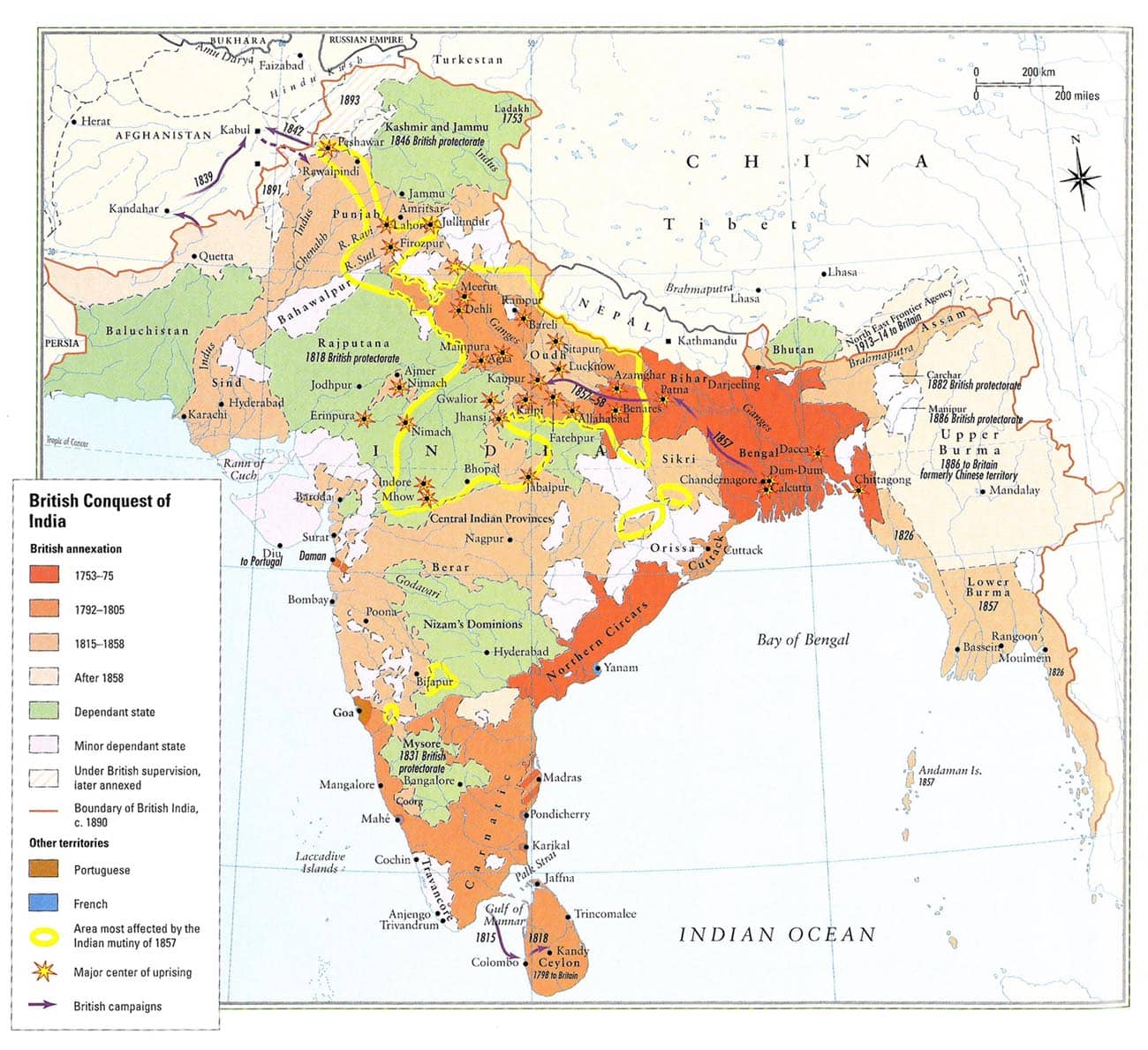
- Conquista británica de la India 1753 a 1890. https://commons.princeton.edu/mg/wp-content/uploads/2017/04/MG-British_Conquest_of_India_1753_to_1890.jpg.

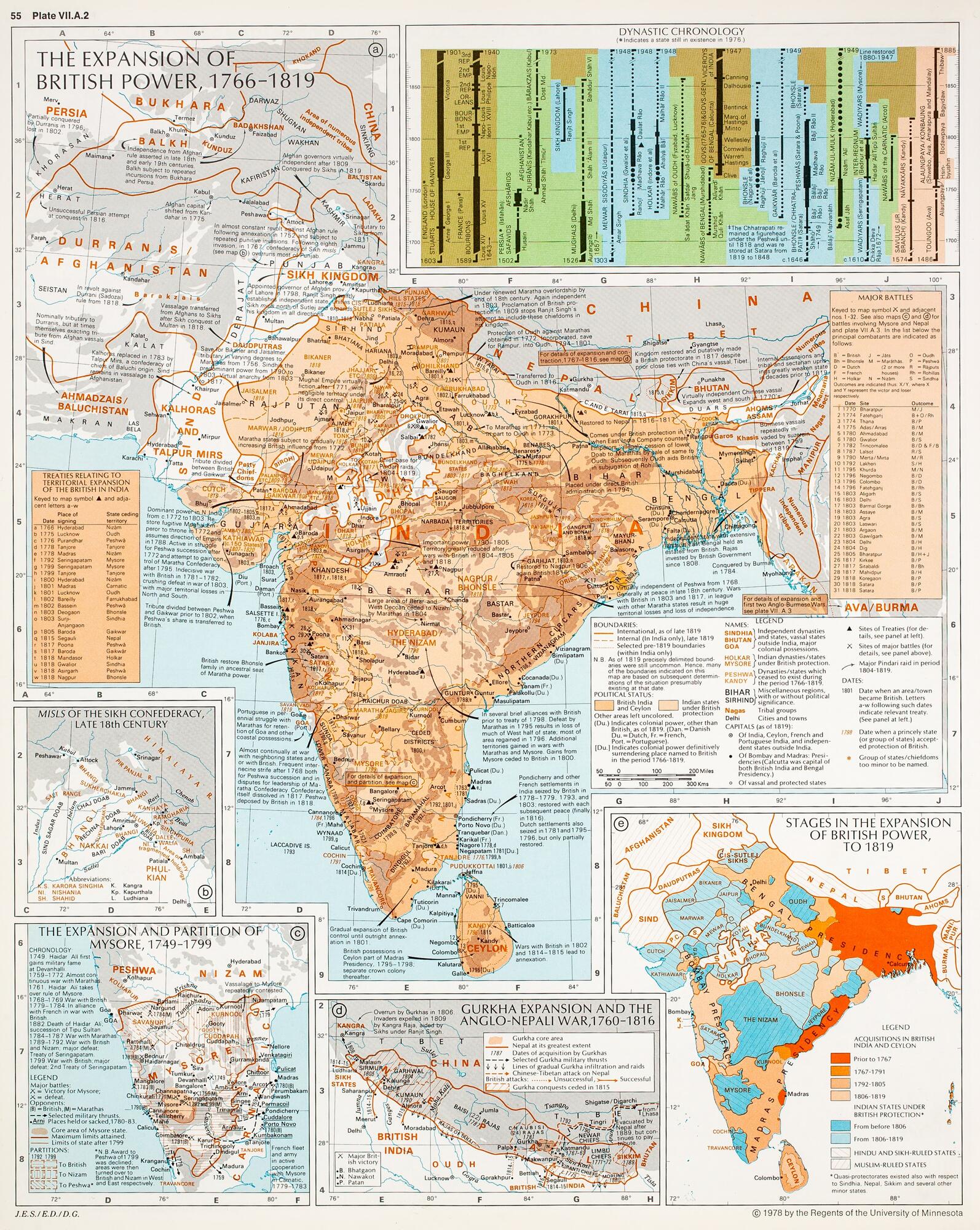
- Una línea de tiempo de dinastías, gobernantes y eventos clave de la historia del sur de Asia : 1766 – 1819. https://projects.iq.harvard.edu/timeline-southasianhistory/british-india-c-1757-ce-1947-ce.

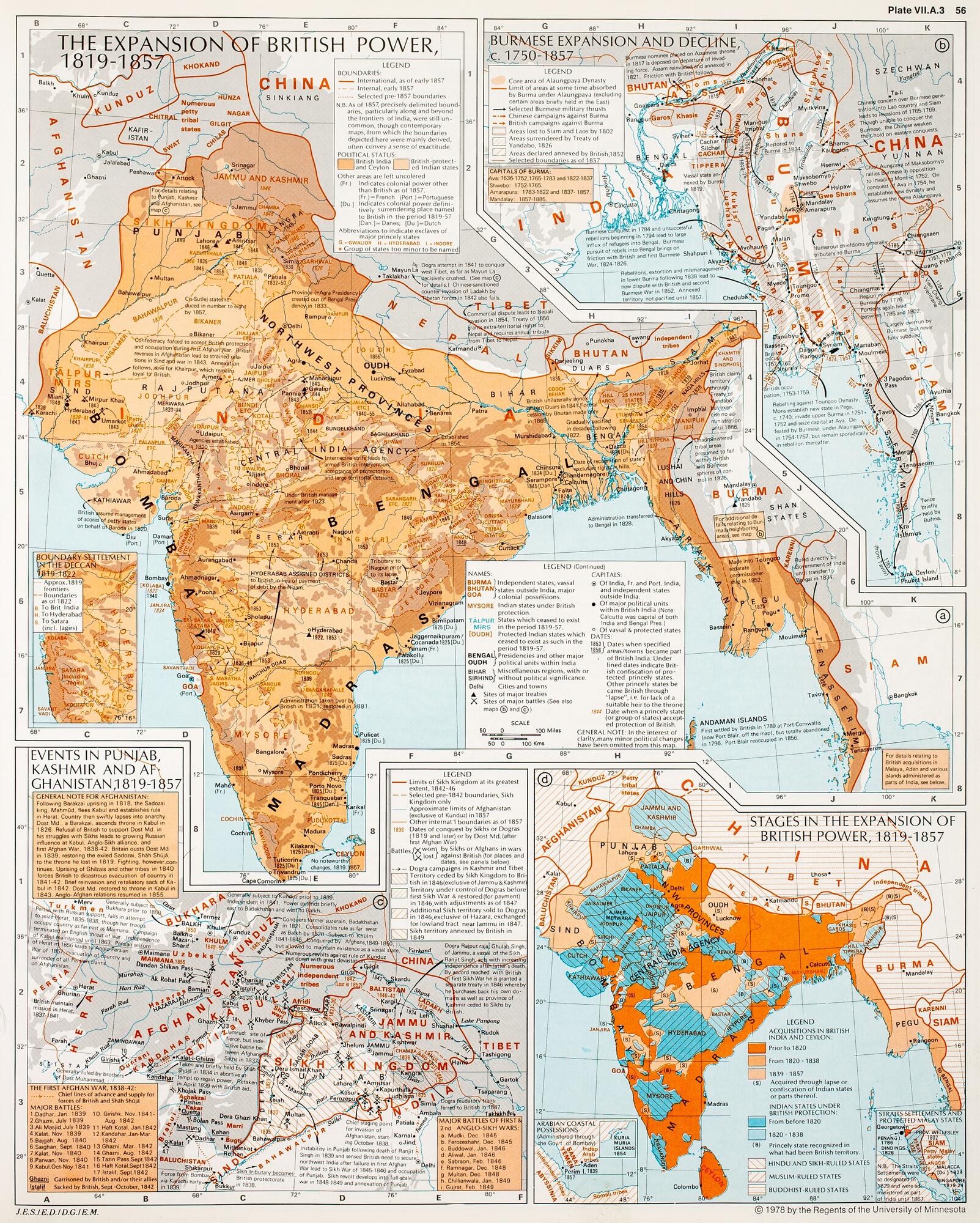
- Una línea de tiempo de dinastías, gobernantes y eventos clave de la historia del sur de Asia : 1819 – 1857. https://projects.iq.harvard.edu/timeline-southasianhistory/british-india-c-1757-ce-1947-ce.

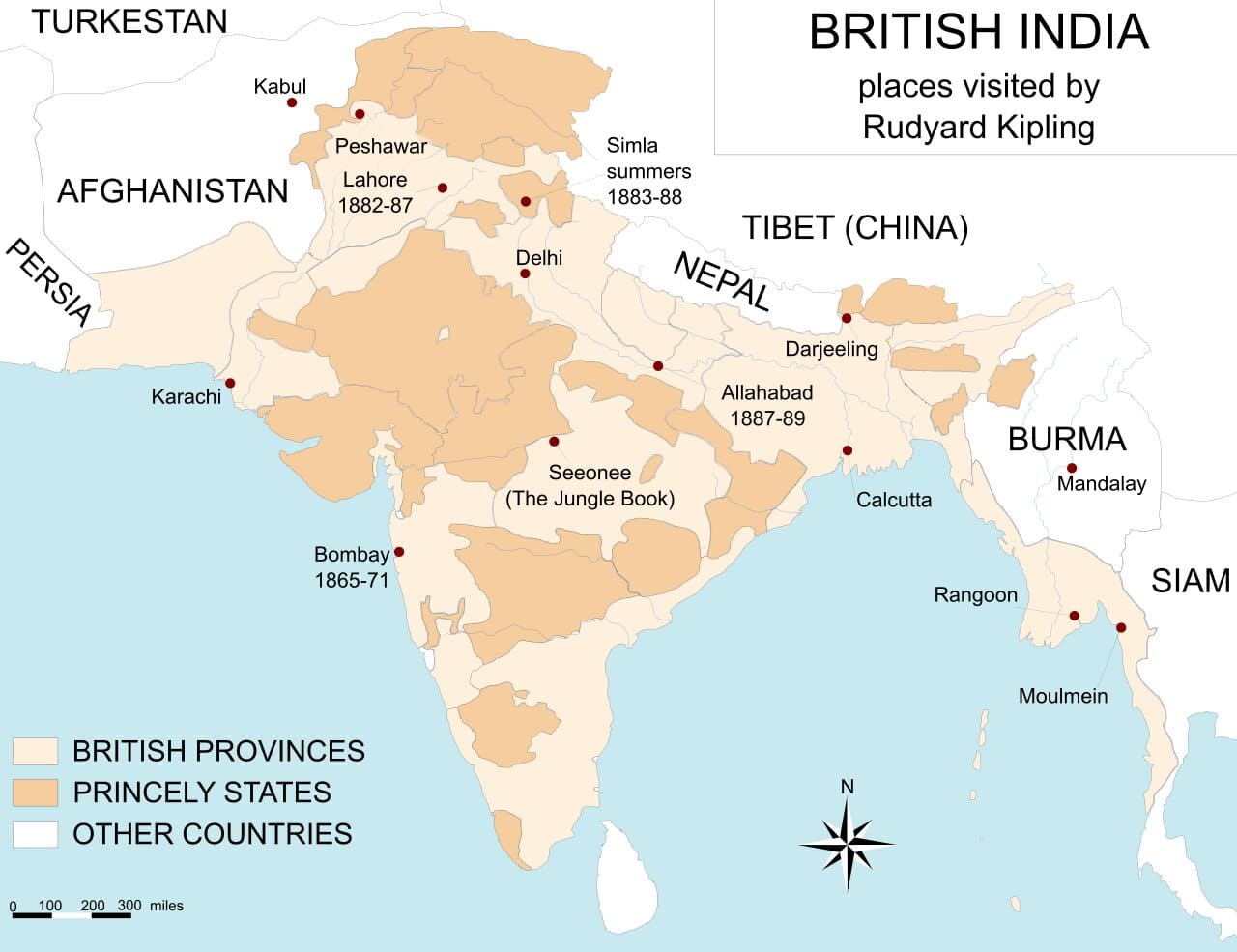
- Mapa de la India británica con lugares de visitas de Rudyard Kipling. https://commons.wikimedia.org/wiki/File:Map_british_india_kipling_en.svg.



![Décimo Junio Juvenal [Sátiras, cap. VI 347-348]](https://piratasyemperadores.com/wp-content/uploads/2022/03/juvenal.jpg)
2 comentarios
MUCHAS GRACIAS POR ESTOS ARTÍCULOS. HAZ MÁS.
Magnífico, muy interesante.