

Una historia sobre los crímenes de guerra aliados
El historiador Jorg Friedrich y el novelista Gunter Grass iniciaron una controversia a principios del siglo XXI, cuando quisieron llevar a debate algunas de las controvertidas tácticas y políticas bélicas que derivaron en crímenes de guerra de los Aliados, algunos de los cuales afectaron especialmente a los civiles alemanes (y de otras nacionalidades).
Especialmente remarcables, según ambos autores, fueron las políticas de bombardeos estratégicos de los aliados occidentales contra grandes núcleos urbanos. No menos importantes e impactantes fueron otras acciones llevadas por el Ejército Rojo contra civiles que, sin embargo, y, a diferencia de Grass, Friedrich parece no haber criticado de la misma forma a pesar del enorme coste humano que supuso.
Tras finalizar la guerra, la sociedad alemana quedó traumatizada por el grado de devastación que había sufrido el país a todos los niveles. Este trauma y culpa se convirtió durante décadas en una gran losa silenciosa que pendió sobre una sociedad alemana, la cual prefería evitar hablar del tema para ocultar también sus propias vergüenzas, y por evitar que quien emitiera cualquier mínima crítica al papel de los aliados durante la guerra, fuera acusado de pro nazi.
Con el tiempo, este fenómeno daría paso a una cierta normalización de un debate crítico sobre los crímenes de guerra cometidos por los aliados contra civiles alemanes. Este debate no solo quiso recordar a las decenas de miles de civiles que murieron en los bombardeos, sino también buscaba responder la pregunta de si aquella estrategia fue realmente necesaria, y si en efecto, tuvo el impacto industrial y moral que buscaban los aliados.
Günter Grass escribió en su libro, A paso de cangrejo: «Nunca deberíamos haber silenciado este sufrimiento solo por el hecho de que nuestra culpa era omnipresente y nuestros lamentos ocuparon todos estos años, mientras dejábamos que la ultraderecha se apropiara de esa realidad».
Tras el colapso de la Unión Soviética comenzaron a surgir autores e intelectuales que quisieron analizar en profundidad aquel fenómeno y fomentar un debate público, la mayoría sin ánimo revisionista. Y en medio de un tema tan sensible, sectores de la sociedad alemana vinculados a la extrema derecha e izquierda, trataron de obtener réditos políticos de este debate histórico.
El siguiente reportaje trata de compilar algunos de los más importantes crímenes de guerra de los Aliados, analizando aquellas «políticas bélicas» polémicas, algunas producto de la «guerra total» y la forma nazi de hacer la guerra, otras simplemente producto de la barbarie de la propia guerra.

SUSCRÍBETE para acceder a TODOS LOS CONTENIDOS
Durante 30 DÍAS totalmente gratis.

Si ya estás SUSCRITO inicia sesión.
Epílogo
En Europa, los tribunales que juzgaron al Reich alemán y a los responsables de este que habían sobrevivido, se establecieron bajo la autoridad de la Carta de Londres, carta que no fue respetada en muchos casos para los aliados occidentales, y en casi ninguna ocasión por la Unión Soviética.
En dichos tribunales solo se consideraron las denuncias de crímenes de guerra cometidos de las potencias del Eje, y aunque algunos crímenes de guerra de los aliados fueron investigados y, condujeron a consejos de guerra, la mayoría de ellos no se llevaron a juicio, o fueron investigados pero no procesados.
La oscura ironía de los Tribunales de Nuremberg es la hipocresía (o el pragmatismo como se prefiera), de los Aliados al terminar la guerra, ya que muchos criminales de guerra nazis fueron reclutados por Estados Unidos en el marco del programa Paperclip, pero también criminales nazis fueron reclutados por los soviéticos bajo el programa Osoaviakhim.
La que ha sido considerada en no pocas ocasiones como la «guerra justa» por excelencia, ha sido sin embargo la guerra que mayor impacto ha tenido sobre la población de toda la Historia. 60 millones de civiles europeos fueron desarraigados de sus hogares. Murieron más del doble de civiles que soldados. Más de 30 millones de civiles en Europa. [105]
Si algo caracterizó especialmente a la Segunda Guerra mundial, es que fue la guerra que más se cebó con los civiles, y demostró en gran manera cómo los tratados tienen poca o ninguna validez cuando se lucha por la mera supervivencia a estados totalitarios.
FUENTES
- [1] Command of the Air. Giulio Douhet. https://www.airuniversity.af.edu/Portals/10/AUPress/Books/B_0160_DOUHET_THE_COMMAND_OF_THE_AIR.PDF
- [2] The making of the atomic bomb. Richard Rhodes. p. 520. La casa de la guerra. James Carroll. p.28
- [3] RAF History – Bomber Command 60th Anniversary. https://heritage.suffolk.gov.uk/Source/SSF61689
- [4] The Battle of History. John Keegan. p. 26
- [5] Dresden: Tuesday, February 13, 1945. Frederick Taylor. London: Bloomsbury. Capítulo Call Me Meier. p. 111.
- [6] Right of the Line: the Role of the Raf in World War Two. John Terraine. p.474. Historia de la guerra. John Keegan. p.499
- [7] The Bombing War Europe 1939-1945. Richard Overy. Penguin Books, PDF edition, p. 215. El libro negro de la humanidad Crónica de las grandes atrocidades de la historia Matthew White. p.588, 589
- [8] The Rise of American Air Power. Michael S. Sherry p. 151. 58. La casa de la guerra. James Carroll. p.782
- [9] La aventura de la historia. Año 5. nº 53. Arde Alemania. Los bombardeos aliados sobre la Alemania nazi al final de la guerra.
- [10] Conferencia de Harmon Memorial. U.S Air Force Academy. 1962. William R. Emmerson. La casa de la guerra. James Carroll. p.33
- [11] La casa de la guerra. James Carroll. p.20
- [12] A Forgotten Holocaust: US Bombing Strategy, the Destruction of Japanese Cities & the American Way of War from World War II to Iraq. Mark Selden. 2 May 2007. Japan Focus. https://www.semanticscholar.org/paper/A-Forgotten-Holocaust%3A-US-Bombing-Strategy%2C-the-of-Selden/6927b36a4c6c471bda4e35d5b85a4a960adc1a6f
The Story of World War II. Donald L. Miller. Henry Steele Commager (2001). New York: Simon and Schuster. p. 456.
Bombs, Cities, and Civilians: American Airpower Strategy in World War II. Conrad C. Crane (1993). Lawrence,KS: University of Kansas Press. p. 140.
Collateral Damage: Atrocities, Noncombatant Immunity, and Atrocity after World War II. Sahr Conway-Lanz (2006). New York: Routledge. p. 1.
- [13] The Effects of Strategic Bombing in WWII on German Morale. https://aoav.org.uk/2020/the-effects-of-strategic-bombing-in-wwii-on-german-morale/
- [14] Bombing to win. Robert Pape. p. 70. La casa de la guerra. James Carroll. Notas p.786
- [15] La casa de la guerra. James Carroll. p.33
- [16] Historia de la guerra. John Keegan. p. 498.
Seizing the Enigma. D. Kahn. Londres, 1991, pp. 245-258.
Luftwaffe. W. Murray. Londres, 1985, pp. 8-12. - [17] La casa de la guerra. James Carroll. p.21,22
- [18] Life in Our Times. John Kenneth Galbraith. p. 205. La casa de la guerra. James Carroll. p.781
- [19] The Horror of D-Day: A New Openness to Discussing Allied War Crimes in WWII, Spiegel Online, 05/04/2010. http://www.spiegel.de/international/world/0,1518,692037-2,00.html
- [20] The Horror of D-Day: A New Openness to Discussing Allied War Crimes in WWII. Der Spiegel. http://www.spiegel.de/international/world/0,1518,692037,00.html
- [21] The development of British civil affairs and its employment in the British Sector of Allied military operations during the Battle of Normandy, June to August 1944. Edwards R. Flint.
Cranfield University; Cranfield Defence and Security School, Department of Applied Science, Security and Resilience, Security and Resilience Group. Bedford Cranfield. p. 354 - [22] It Never Snows In September. Ian Allan Publishing. Robert Kershaw (1990)
- [23] Castle looted by British troops AAP, 23 August 1947. http://nla.gov.au/nla.news-article52602674
- [24] Werwolf!: The History of the National Socialist Guerrilla Movement, 1944–1946. Perry Biddiscombe (1998) University of Toronto Press.
- p. 257. https://archive.org/details/werwolfhistoryof00bidd/page/257
- [25] To the victor the spoils: D-Day to VE Day, the reality behind the heroism. Longden, Sean (2004). Arris Books. p. 195
- [26] Japanese War Orphans in Manchuria: Forgotten Victims of World War II. Mayumi Itoh. Palgrave Macmillan US. pp. 34. https://books.google.com/books?id=hbjHAAAAQBAJ&pg=PA34
- [27] To the victor the spoils: D-Day to VE Day, the reality behind the heroism. Sean Longden Arris Books, p. 195
- [28] The secret war. The Guardian. David Wilson. https://www.theguardian.com/commentisfree/2007/mar/27/thesecretwar
- [29] Taken by Force: Rape and American GIs in Europe During World War II. Robert J. Lilly. Palgrave Macmillan.
- [30] Revisionists challenge D-Day story. BBC News. Hugh Schofield. http://news.bbc.co.uk/2/hi/europe/8084210.stm
- [31] Taken by Force: Rape and American GIs in Europe during World War II. J Robert Lilly. p.12
- [32] Politicization of Sexual Violence: From Abolitionism to Peacekeeping. Carol Harrington. London: Ashgate. pp. 80–81. https://books.google.com/books?id=SjspAcONy-gC
- [33] Conquerors’ Road: An Eyewitness Report of Germany 1945. Osmar White. Cambridge and New York: Cambridge University Press. pp. 97–98
- [34] Politicization of Sexual Violence: From Abolitionism to Peacekeeping. Carol Harrington. London: Ashgate. pp. 80–81. https://books.google.com/books?id=SjspAcONy-gC
- [35] Race After Hitler: Black Occupation Children in Postwar Germany and America. Heide Fehrenbach. Princeton, New Jersey: Princeton University Press. p. 64.
- [36] Politicization of Sexual Violence: From Abolitionism to Peacekeeping. Carol Harrington. London: Ashgate. pp. 80–81. https://books.google.com/books?id=SjspAcONy-gC
- [37] Were Americans As Bad as the Soviets?. Der Spiegel. 2 March 2015. http://www.spiegel.de/international/germany/book-claims-us-soldiers-raped-190-000-german-women-post-wwii-a-1021298.html
- [38] They raped every German female from eight to 80. The Guardian. Antony Beevor. https://www.theguardian.com/books/2002/may/01/news.features11
Berlín: La caída: 1945. Antony Beevor. p.51 - [39] They raped every German female from eight to 80. The Guardian. Antony Beevor. https://www.theguardian.com/books/2002/may/01/news.features11
Berlín: La caída: 1945. Antony Beevor. Pag. 23-24 - [40] Berlín: La caída: 1945. Antony Beevor. Pag. 30, 51
- [41] The Russians in Germany: A History of the Soviet Zone of Occupation, 1945-1949. Norman Naimark. Cambridge, Mass., 1995. p. 70.
Berlín: La caída: 1945. Antony Beevor. Pag. 220 - [42] Berlín: La caída: 1945. Antony Beevor. Pag. 26, 305
- [43] Berlín: La caída: 1945. Antony Beevor. Pag. 26, 27
- [44] Berlín: La caída: 1945. Antony Beevor. pag. 78
- [45] Berlín: La caída: 1945. Antony Beevor. pag. 27, 301
- [46] Lev Kopelev, No Jail for Thought, Londres, 1977. pag. 50
- [47] Russia at War, Londres, 1964. Alexander Werth. Rusia en la guerra, 1941- 1945, Grijalbo, Barcelona, 1968. p. 964.
- [48] Berlín: La caída: 1945. Antony Beevor. Pag. 28
- [49] Berlín: La caída: 1945. Antony Beevor. pag. 79
- [50] Berlín: La caída: 1945. Antony Beevor. pag. 79
- [51] Berlín: La caída: 1945. Antony Beevor. pag. 247
- [52] Berlín: La caída: 1945. Antony Beevor. pag. 300
- [53] Berlín: La caída: 1945. Antony Beevor. pag. 307
- [54] Berlín: La caída: 1945. Antony Beevor. pag. 301
- [55] Iron Curtain, The Crushing of Eastern Europe.Anne Applebaum. p.32.
Beyond Duty: The Reason Some Soldiers Commit Atrocities. Walter S. Zapotoczny Jr. Fonthill Media. pp. 114. https://books.google.com/books?id=cTMqDwAAQBAJ&pg=PT114 - [56] Prisoner Taking and Prisoner Killing in the Age of Total War: Towards a Political Economy of Military Defeat. War in History 2004 11 (2) 148–192 pg. 186 (Table 4)
[57] The Institutional Features of the Prisoners of War Treaties. James D. Morrow. Center for Political Studies at The University of Michigan. http://www.nyu.edu/gsas/dept/politics/seminars/riip4.pdf - [58] Fire and Ice: The Nazis’ Scorched Earth Campaign in Norway. Vincent Hunt. The History Press. pp. ?. ISBN 9780750958073.
- [59] Historiker roser ‘Under Sandet’ selv om der skrues «liiige lovligt meget på drama-knappen. Politiken. https://politiken.dk/kultur/art5601303/Historiker-roser-Under-Sandet-selv-om-der-skrues-%C2%BBliiige-lovligt-meget-p%C3%A5-drama-knappen%C2%AB
«UNDER SANDET – NY FILM AF MARTIN ZANDVLIET». Journalist, Eva Lange Jørgensen. http://www.dfi.dk/Nyheder/FILMupdate/2014/Juni/Under-sandet-ny-film-af-Martin-Zandvliet.aspx# - [60] Katyn: The Untold Story of Stalin’s Polish Massacre. Paul Allen. Scribner Book Company.
World War II Behind Closed Doors: Stalin, the Nazis and the West. Random House Digital, Inc. Laurence Rees
Katyn and the Soviet Massacre of 1940: Truth, Justice and Memory. George Sanford. Routledge. https://books.google.com/books?id=tV2AAgAAQBAJ&q=soviet+320%2C000+poles+deported&pg=PT56
Stalin y la masacre de Katyn. Cédric Tourbe. https://www.filmaffinity.com/es/film595617.html - [61] Learn about the horrible conditions of German and Soviet prisoners of war during World War II. https://www.britannica.com/video/180234/Discussion-POWs-German-Soviet-World-War-II
- [62] Dark continent. Mark Mazower. pp. 231-232
- [63] Black Tulip. http://geschiedenis.vpro.nl/afleveringen/23997653
- [64] Red Holocaust. Steven Rosefielde. Abingdon; Nueva York: Routledge.
Katyn and the Soviet Massacre of 1940: Truth, Justice and Memory. George Sanford. Routledge. https://books.google.com/books?id=tV2AAgAAQBAJ&q=soviet+320%2C000+poles+deported&pg=PT56 - [65] Chechnya: The Case for Independence. Tony Wood. Verso Books.
- [66] Un Estado contra su pueblo. Violencias, temores y represiones en la Unión Soviética. Nicolas Werth
Reporteros. Joe Sacco. Pag. 46 - [67] From Conquest to Deportation: The North Caucasus under Russian Rule. Jeronim Perovic. Oxford University Press. p. 320. https://books.google.com/books?id=O19gDwAAQBAJ&pg=PA320
- [68] The Civic and the Tribal State: The State, Ethnicity, and the Multiethnic State. Feliks Gross. Greenwood Publishing Group. https://books.google.com/books?id=sJhWKAcXXKcC&pg=PA37
- [69] Katyn and the Soviet Massacre of 1940: Truth, Justice and Memory. George Sanford. Routledge. https://books.google.com/books?id=tV2AAgAAQBAJ&q=soviet+320%2C000+poles+deported&pg=PT56
Red Holocaust. Steven Rosefielde. Abingdon; Nueva York: Routledge. ISBN 978-0-415-77757-5. - [70] Reflections on the Gulag: With a Documentary Index on the Italian Victims of Repression in the USSR. Greenwood Publishing Group. Dundovich, Elena; Gori, Francesca; Guercetti, Emanuela (2003). p. 100. https://books.google.com/books?id=X2FGqiDKFysC&q=6%2C015
- [71] Politics and Nationality in Contemporary Soviet-Jewish Emigration, 1968-89. Salitan, Laurie P. (1992). Rosemary Thorp (ed.). Springer. p.74. https://books.google.com/books?id=YTOvCwAAQBAJ&q=Soviet+000+germans+deported&pg=PA74
- [72] The Deportation of Peoples in the Soviet Union. Bugay, Nikolay. Nova Publishers. p.156. https://books.google.com/books?id=xwp5y9NDaEwC&pg=PA198
- [73] Punished Peoples of the Soviet Union: The Continuing Legacy of Stalin’s Deportations (PDF). New York: Human Rights Watch. September 1991. https://www.hrw.org/reports/pdfs/u/ussr/ussr.919/usssr919full.pdf
- [74] Historical Dictionary of the Chechen Conflict. Askerov, Ali (2015). Rowman & Littlefield. p.12. https://books.google.com/books?id=L0jDCAAAQBAJ&q=chechens+ingush+deported+478%2C479&pg=PA12
- [75] Against Their Will: The History and Geography of Forced Migrations in the USSR. Polian, Pavel. Budapest: Central European University Press. p.33. https://en.wikipedia.org/wiki/Against_Their_Will_(book)
- [76] The Deportation of Peoples in the Soviet Union. Bugay, Nikolay (1996). Nova Publishers. https://books.google.com/books?id=xwp5y9NDaEwC&pg=PA198
Punished Peoples of the Soviet Union: The Continuing Legacy of Stalin’s Deportations (PDF). New York: Human Rights Watch. https://www.hrw.org/reports/pdfs/u/ussr/ussr.919/usssr919full.pdf - [77] The Deportation of Peoples in the Soviet Union. Bugay, Nikolay (1996). Nova Publishers. p.156. https://books.google.com/books?id=xwp5y9NDaEwC&pg=PA198
Punished Peoples of the Soviet Union: The Continuing Legacy of Stalin’s Deportations (PDF). New York: Human Rights Watch. https://www.hrw.org/reports/pdfs/u/ussr/ussr.919/usssr919full.pdf - [78] Social Identity and Conflict: Structures, Dynamics, and Implications. Korostelina, K. (2007). Springer. p. 9. https://books.google.com/books?id=LzB9DAAAQBAJ&q=9%2C620+armenian+12%2C420+Bulgarians+15%2C040+greeks&pg=PA9
- [79] Punished Peoples of the Soviet Union: The Continuing Legacy of Stalin’s Deportations. (PDF). New York: Human Rights Watch. https://www.hrw.org/reports/pdfs/u/ussr/ussr.919/usssr919full.pdf
- [80] A kárpátaljai magyar és német polgári lakosság tömeges elhurcolása szovjet hadifogságba Bognár, Zalán (2012). The deportation of masses of Hungarian and German civilians from Subcarpathia to Soviet prisoner of war camps. Orpheus Noster (in Hungarian). Budapest: Károli Gáspár Református Egyetem. https://www.academia.edu/11885029
Against Their Will: The History and Geography of Forced Migrations in the USSR. Polian, Pavel. Central European University Press. p.332. https://en.wikipedia.org/wiki/Against_Their_Will_(book) - [81] Ukrainian Insurgent Army – History of the unconquered. Viatrovych, V.; Hrytskiv, R.; Dereviany, I.; Zabily, R.; Sova, A.; Sodol, P. (2007). Volodymyr Viatrovych (ed.). Українська Повстанська Армія – Історія нескорених. Lviv Liberation Movement Research Centre. pp. 307–310.
- [82] Council of Europe 2006, p. 158. https://en.wikipedia.org/wiki/Population_transfer_in_the_Soviet_Union#Council_of_Europe
- [83] Encyclopedia of World Geography – Facts on File library of world geography. McColl, R.W. (2014). Infobase Publishing. p. 803. https://books.google.com/books?id=DJgnebGbAB8C&q=400%2C000
- [84] Revenge on Ethnic Germans: Czech Town Di-vided over How to Conmemorate 1945 Massacre. Spiegel Online, 4 de septiem-bre de 2009. Hans-Ulrich Stoldt https://www.spiegel.de/international/europe/revenge-on-ethnic-germans-czech-town-divided-over-how-to-commemorate-1945-massacre-a-646757.html
- [85] Germany Expellees and Border Changes. Dornberg.
Chezch News Agency, Transfer of Germans from Czechoslovakia.
El libro negro de la Humanidad. Mathew White. p.600. - [86] The Expulsion of the ‘German’ Communities from Eastern Europe at the End of the Second World War. Steffen Prauser and Arfon Rees. European University Institute, Florence: Department of History and Civilization. http://cadmus.iue.it/dspace/bitstream/1814/2599/1/HEC04-01.pdf. https://web.archive.org/web/20091001022039/
- [87] Churchill, ¡No nos rendiremos jamás!. Los mejores discursos de Winston Churchill, trad.: Alejandro Devoto, Planeta, Barcelona, 2006, p. 455. El libro negro de la Humanidad. Mathew White. p.601.
- [88] Brief History of Ethnic Cleansing; Krah, Germans as Victims?. Bell-Fialkoff.
El libro negro de la Humanidad. Mathew White. p.602. - [89] Czech News Agency, Profile: Organised Sudeten Deportations Began 50 Years Ago. El libro negro de la Humanidad. Mathew White. p.602.
- [90] Second World War, p. 593. John Keegan.
El libro negro de la Humanidad. Mathew White. p.602. - [91] El libro negro de la humanidad Crónica de las grandes atrocidades de la historia Matthew White
- [92] Berlín: La caída: 1945. Antony Beevor. pag. 78
- [93] Ethnic Cleansing in the USSR, 1937–1949. J. Otto Pohl. Greenwood Press. pp. 9–20. https://books.google.com/books?id=SnLANpCfDn4C
Un Estado contra su pueblo. Violencias, temores y represiones en la Unión Soviética. Nicolas Werth. En El libro negro del comunismo.pag. 255 - [94] The Laconia Incident: How Friendly Fire Changed POW Treatment for the Rest of the War. https://www.warhistoryonline.com/instant-articles/laconia-incident-friendly-fire-changed-pow-treatment-rest-war.html?chrome=1. The Laconia incident and the total war at sea (The Laws of War) Ignacio Jáuregui-Lobera. https://revistas.proeditio.com/jonnpr/article/view/3307/HTML3307
- [95] British Submarines 1939–45. McCartney, Innes (15 July 2013) p. 21.
Atrocity, Deviance, and Submarine Warfare: Norms and Practices during the World Wars. Ben-Yehuda, Nachman (15 July 2013). p. 133. - [96] HMS Torbay (N79). Michael L. Hadley. Count Not the Dead: The Popular Image of the German Submarine. McGill-Queen’s University Press. p. 135. http://www.desertwar.net/hms-torbay-n79.html
- [97] Chronology of the War at Sea, 1939–1945: The Naval History of World War Two. Naval Institute Press. Rohwer, Jürgen (2005). p. 192. https://books.google.com/books?id=TpDlFI453RcC
- [98] Italian hospital ship Po sunk by British. marpubs. 14 March 2017. https://xray-mag.com/content/italian-hospital-ship-po
Wien SS (1911~1919) Po SS (+1941). Wikipedia. https://commons.wikimedia.org/wiki/Category:Vienna_(ship,_1911) - [99] SS California [+1941]. Wikipedia. https://en.wikipedia.org/wiki/List_of_shipwrecks_in_April_1941
- [100] Lazarettschiffe Tübingen. Feldgrau.com. http://www.feldgrau.com/hs-tubingen.html
- [101] Die Wehrmacht-Untersuchungsstelle für Verletzungen des Völkerrechts. https://www.deutsche-digitale-bibliothek.de/item/YQUAAXBNFL56FKKHSI4IFVNRSU3J4ZSG. Lazarettschiffe Tübingen. Lindenbaum Verlag. https://lindenbaum-verlag.de/produkt/die-wehrmacht-untersuchungsstelle-dokumentation-alliierter-kriegsverbrechen-im-zweiten-weltkrieg/
- [102] Berlín: La caída: 1945. Antony Beevor. pag. 139
- [103] La aventura de la historia. Año 5, nº 53. Arde Alemania. Los bombardeos aliados sobre la Alemania nazi al final de la guerra.
Le Monde Diplomatique. Un crimen silenciado. La tragedia del barco prisión Cap Arcona. - [104] 1952: Il caso delle «marocchinate» al Parlamento. http://www.cassino2000.com/cdsc/studi/archivio/n07/n07p09.html
The Russians in Germany: A History of the Soviet Zone of Occupation, 1945–1949. Norman M. Naimark. Cambridge: Belknap Press. p.106-107 - [105] World War II casualties – Centre européen Robert Schuman. http://www.centre-robert-schuman.org/userfiles/files/REPERES%20%E2%80%93%20module%201-2-0%20-%20explanatory%20notes%20%E2%80%93%20World%20War%20II%20casualties%20%E2%80%93%20EN.pdf
National Death Tolls for the Second World War. http://necrometrics.com/ww2stats.htm
SUSCRÍBETE para acceder a TODOS LOS CONTENIDOS
Durante 30 DÍAS totalmente gratis.
Si ya estás SUSCRITO inicia sesión.
GALERÍA MULTIMEDIA
- El Drama De Dresde. ZDF. 2005.
- Dresden Bombed To Atoms: World War II (1945) | British Pathé.
- The SHOCKING Real Story of the Dresden Firestorm. TIKhistory.
- War Crimes of the Liberators | Restricted R18+. hazards and catastrophes.
- Why Were the Soviets so Cruel in East Prussia during World War II? History Hustle.
- The Crimes of the Liberators – America’s Dark Secrets in WWII. Get.factual.
- 3 BRUTAL Allied Generals That Would Have Been Tried for WARCRIMES if on the Losing Side of WW2. The Front.
- The HORRIFIC Torture Of German Women At The Hands Of Allied Soldiers. TheUntoldPast.
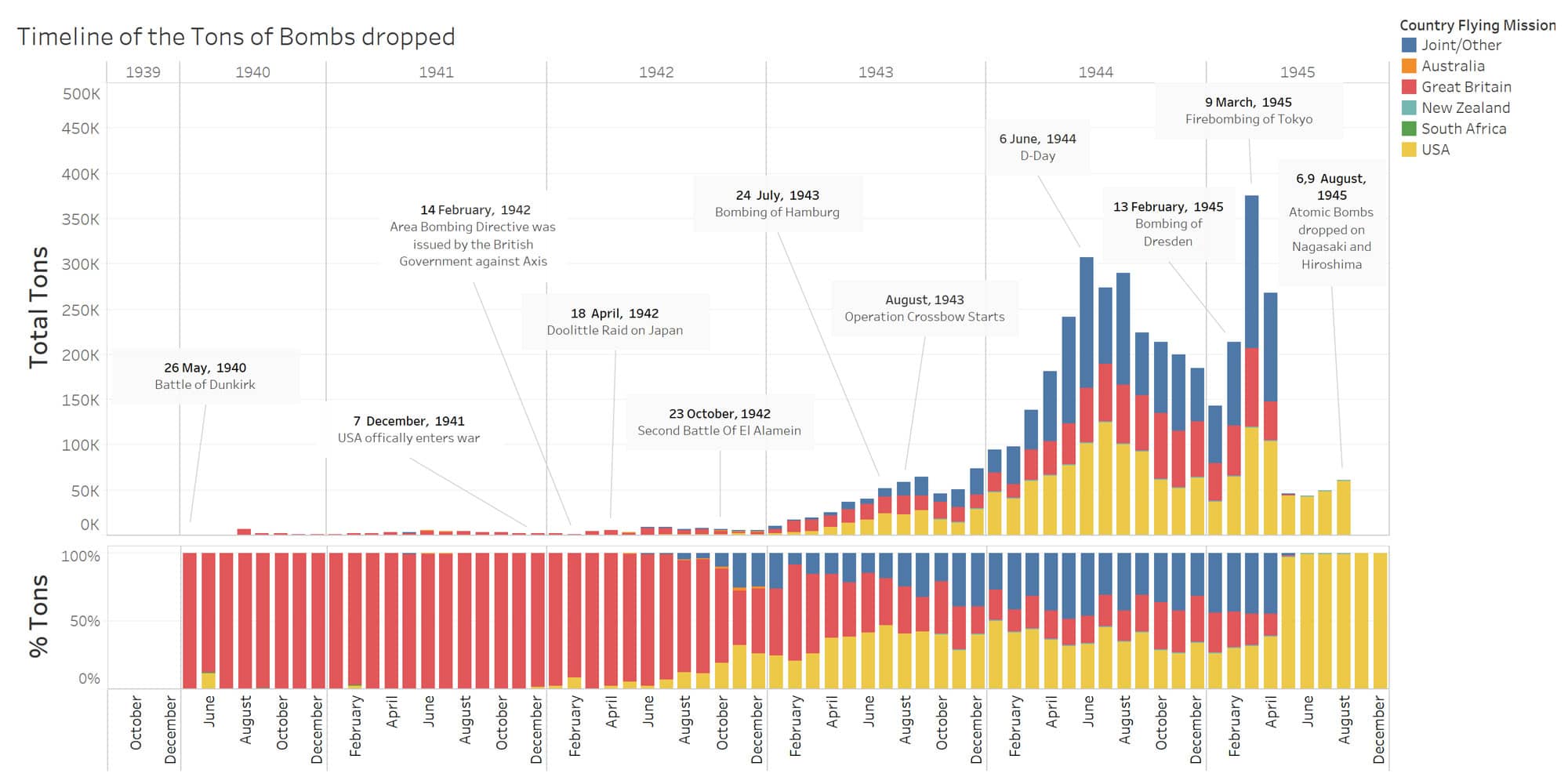
- Visualization of WWII Aerial Bombing. https://medium.com/@cheinu.mike/wwii-aerial-bombing-visualization-2773290e45b




3 comentarios
Churchill ha sido el gran marrano de la segunda Guerra Mundial al igual que el judio Roostvelt,seres inmundos que planearon la eliminacion sistematica de Alemania, definitivamente Hitler cometio un gran error al dejar vivir a Inglaterra en 1940 cuando ya estaba practicamente vencida, ya que si las tropas alemanas hubieran invadido las Islas Britanicas no hubieran resistido mucho,debido a que estaban en inferioridad,tecnologica,belica y de todo tipo,malditos ingleses cerdo al igual que los AMERICANOS!!
Es dificil que en una guerra larga, ningún bando cruce la línea de acciones bélicas «legítimas» y se pase al terreno de los crímenes de guerra.
En la segunda guerra mundial, absolutamente todos los bandos cometieron en algún caso crímenes de guerra, pero la verdad sea dicha, el volumen de dichos crímenes es mayor del lado alemán y soviético que de las potencias occidentales.
Stalin y Hitler daban la espalda a los sufrimientos de sus pueblos y por supuesto nunca mostraron tampoco piedad con sus enemigos. Solo de ese modo se puede explicar que entre ambas potencias murieran más de 25 millones de personas.
Toda persona con un arma en la mano puede llegar a cometer un abuso, lamentablemente los medios de comunicación dominados por la economía americana difunden sólo propaganda anti nazi, pero no hacen referencia acerca de las atrocidades cometidas por los yanquis en Vietnam, Hiroshima, Irak, o los golpes de estado financiados por EUA en América latina con motivos políticos nacientes de la guerra fría, ahí tenemos a Pinochet que se llenó los bolsillos con US$ matando chilenos, guardados en EEUU (banco riggs) y abogados financiados por EUA. Los medios no son imparciales, Hitler es tan asesino como Stalin, Rosevelt, El chancho Churchil y otros cochinos con poder. No somos nada.